Tiles are a popular choice for flooring and wall coverings in homes, offices, and commercial spaces. They are not just functional but also add aesthetic appeal to any environment. With various types available, it can be confusing to choose the right one. Below is an in-depth guide to help you understand different tile types and their features, along with common questions customers may have.
Types of Tiles
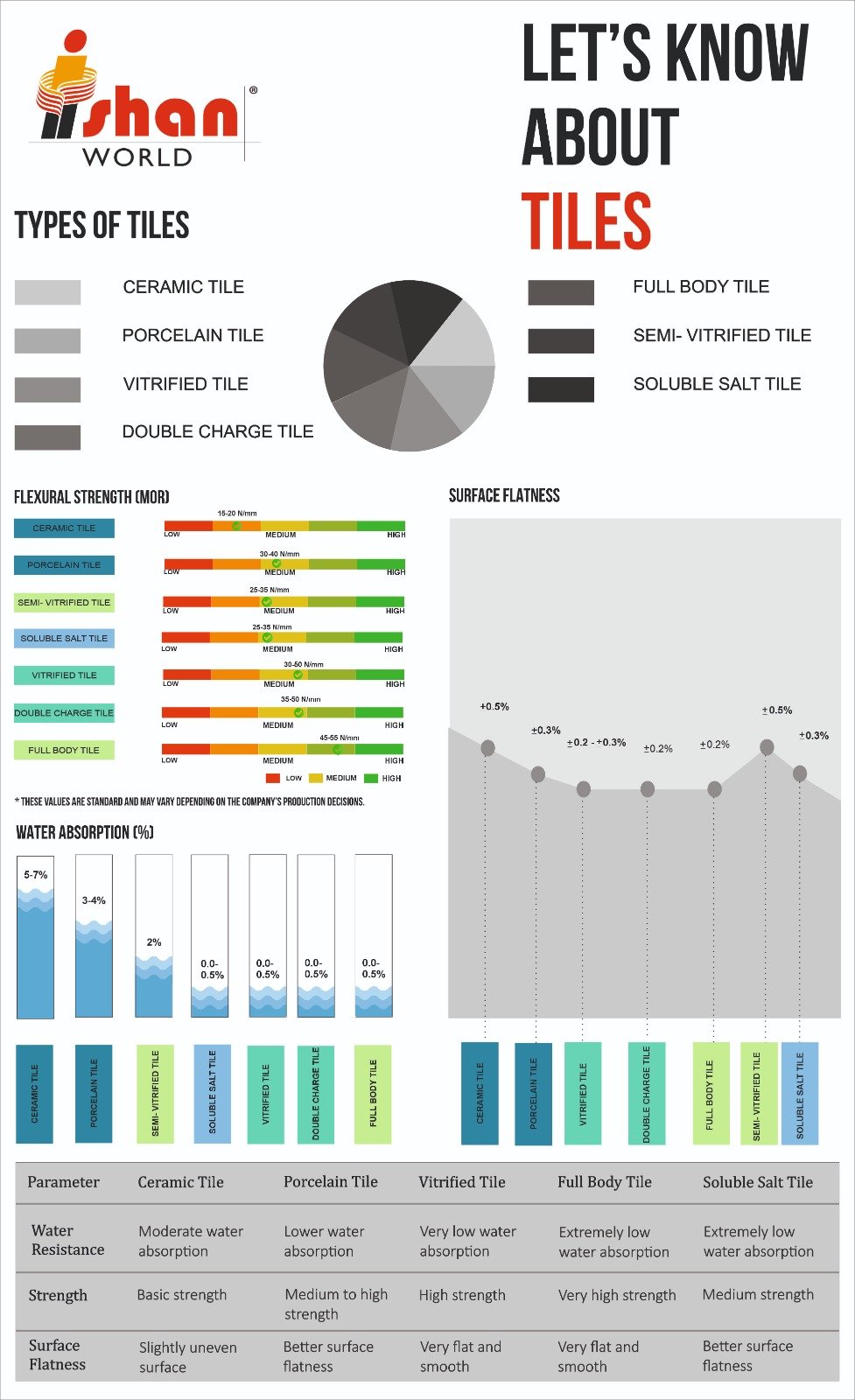
- Ceramic Tiles
- Description: Made from clay and then baked at high temperatures.
- Water Absorption: Moderate water absorption (5-7%).
- Flexural Strength: Low strength (15-20 N/mm²).
- Surface Flatness: Slightly uneven surface.
- Porcelain Tiles
- Description: A subtype of ceramic tiles but denser and less porous.
- Water Absorption: Lower absorption rate (3.4%).
- Flexural Strength: Medium strength (30-40 N/mm²).
- Surface Flatness: Better than ceramic tiles.
- Vitrified Tiles
- Description: Made with a mixture of clay and silica, offering higher durability.
- Water Absorption: Very low (2%).
- Flexural Strength: Medium strength (30-40 N/mm²).
- Surface Flatness: Very flat and smooth.
- Double Charge Tiles
- Description: Made by fusing two layers of materials, great for heavy traffic areas.
- Water Absorption: Extremely low (0.0-0.5%).
- Flexural Strength: High strength (45-55 N/mm²).
- Surface Flatness: Very flat and smooth.
- Full Body Tiles
- Description: The color and pattern run through the entire tile.
- Water Absorption: Extremely low (0.0-0.5%).
- Flexural Strength: Very high strength (≥ 50 N/mm²).
- Surface Flatness: Very flat and smooth.
- Soluble Salt Tiles
- Description: Typically cheaper, made using a different method.
- Water Absorption: Very low (0.0-0.5%).
- Flexural Strength: Medium strength.
- Surface Flatness: Better surface flatness compared to ceramic.
Key Properties of Tiles
- Water Resistance: A crucial feature, particularly for areas prone to moisture (like kitchens and bathrooms).
- Strength: Indicates how much weight the tile can withstand. Important for both structural support and durability over time.
- Surface Flatness: Affects the appearance and usability of tiles, especially in large spaces.
Conclusion
Tiles are a versatile and stylish option for various applications throughout your home or business. Understanding the differences between tile types and their unique properties will help you make informed decisions that suit your needs. Whether you’re focusing on aesthetics, durability, or water resistance, there’s a tile type perfect for every project. Always feel free to consult with professionals for tailored advice and recommendations.
Frequently Asked Questions (FAQs)
- What type of tile is best for bathrooms?
- Answer: Porcelain or vitrified tiles are ideal due to their low water absorption rates and high durability.
- Can I use ceramic tiles for outdoor spaces?
- Answer: While ceramic tiles can be used outdoors, it’s better to choose porcelain tiles as they are more water-resistant and durable.
- How do I choose the right tile for my kitchen?
- Answer: Consider the water absorption rate and choose tiles with low absorption, like porcelain or vitrified tiles, for easier cleaning and longevity.
- What is the difference between glazed and unglazed tiles?
- Answer: Glazed tiles have a layer of glass on top that gives them a shiny finish and protects them, while unglazed tiles lack this layer and have a more natural appearance.
- How do I maintain my tiles?
- Answer: Regular cleaning with a mild detergent and periodic sealing (for unglazed tiles) can extend the life of your tiles.
- Are larger tiles better than smaller ones?
- Answer: Larger tiles can create a more spacious feel and reduce the number of grout lines, while smaller tiles can be better for intricate designs.
- What is the cost difference between ceramic and porcelain tiles?
- Answer: Generally, porcelain tiles tend to be more expensive than ceramic tiles due to their superior properties and manufacturing process.
- Can I install tiles myself?
- Answer: Yes, if you have the right tools and knowledge, DIY installation can be done. However, hiring a professional is recommended for the best results.
Elevate Your Space with Quality Tiles – Discover Strength and Style at Ishan World!