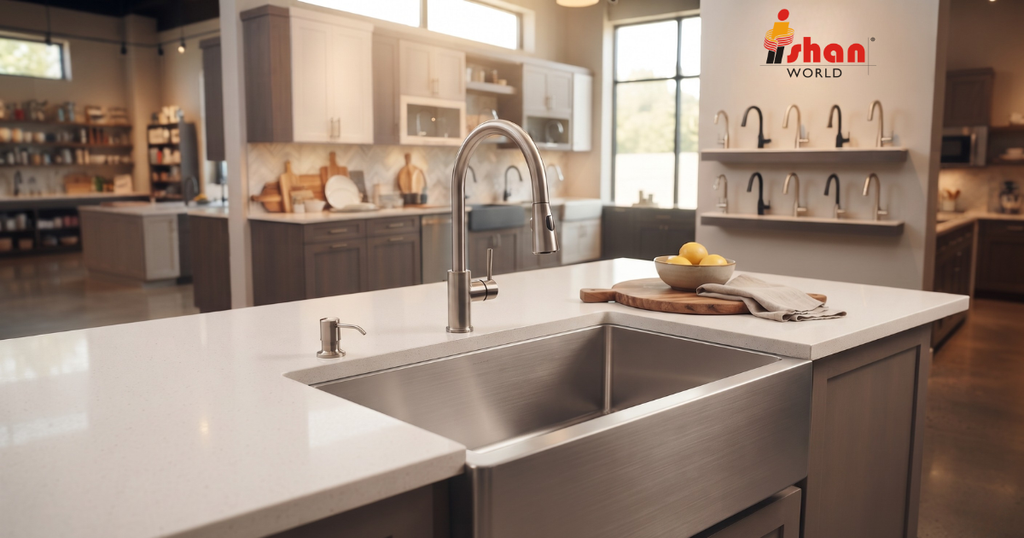
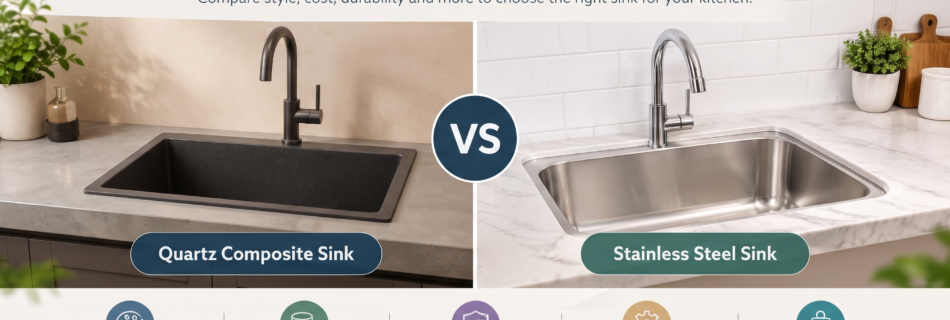
Quartz vs stainless steel kitchen sink

Quartz vs Stainless Steel Kitchen Sink: 5 Key Differences

Quartz Kitchen Sink vs Stainless Steel Sink: Which Is Better?

Choosing the right kitchen sink is essential for a functional and stylish kitchen. When comparing a quartz vs stainless steel kitchen sink, consider appearance, cost, weight, durability, and maintenance. Both options offer practical benefits, but the right choice depends on your kitchen design and daily needs.

This guide from Ishan Worlds will help you choose the right sink for your home.

What Is a Quartz Kitchen Sink?

Description
Quartz kitchen sinks are generally made from engineered composite materials containing mineral particles combined with resin. They are available in different colours and finishes, making them a popular choice for contemporary kitchens.
AdvantagesDisadvantages
Available in various colours and modern finishes.Some models cost more than stainless steel sinks.
Can resist routine scratches and everyday wear, depending on quality.Heavier construction may require suitable support.
Often quieter when water and dishes contact the surface.Heavy impacts can cause chips or damage.
Complements a range of countertop designs.Heat resistance varies by product.
Quartz vs stainless steel kitchen sink

What Is a Stainless Steel Kitchen Sink?

Description
Stainless steel sinks are widely used because of their practical design, easy maintenance, and availability across different price ranges.
AdvantagesDisadvantages
Available at a range of price points.Scratches may become visible over time.
Generally lighter and easier to handle.Water spots can appear if the surface is not dried.
Offers corrosion resistance under normal use.Some models can be noisy without sound-dampening features.
Available in single-bowl and double-bowl designs.Resistance to dents depends on steel thickness and construction.
Easy to clean for everyday kitchen use.—

Quartz vs Stainless Steel Sink: Quick Comparison

FeatureQuartz CompositeStainless Steel
AppearanceMultiple colours and finishesClassic metallic finish
CostOften more expensiveWide range of budgets
WeightGenerally heavierGenerally lighter
NoiseOften quieterDepends on insulation and design
MaintenanceRegular cleaning requiredRegular cleaning required
DurabilityDepends on material and qualityDepends on steel grade and thickness

Which Kitchen Sink Should You Choose?

Choose a quartz composite sink if you prefer a contemporary look, want more colour options, and value a coordinated kitchen design.

Choose a stainless steel sink if you prefer a classic metallic appearance, want flexible budget options, and need a practical sink for everyday use.

Your final choice should depend on your kitchen layout, budget, cooking habits, and the manufacturer’s specifications.

Tips Before Buying a Kitchen Sink

Before purchasing, consider:

  • Size and depth: Ensure the sink fits your countertop and daily needs.
  • Bowl configuration: Choose a single or double bowl based on your routine.
  • Installation: Check compatibility with your countertop and cabinetry.
  • Material quality: Compare specifications, finish, and warranty.
  • Maintenance: Follow the manufacturer’s cleaning and care instructions.

Find the Right Kitchen Sink with Ishan Worlds

quartz kitchen sink
quartz kitchen sinkquartz kitchen sink

The right kitchen sink combines functionality with a design that complements your interiors. Whether you prefer the modern appeal of quartz composite or the timeless practicality of stainless steel, compare materials and specifications before deciding.

Explore home interior inspiration at Ishan Worlds.

Why Choose ISHAN WORLD

When it comes to selecting the right tiles, sanitaryware, bathware, and bath fittings, ISHAN WORLD stands out as a trusted, all-in-one destination for quality, variety, and value. We offer a carefully curated selection of ceramic, porcelain, vitrified, double charge, and full body tiles—sourced from top manufacturing units using the latest technologies.

At ISHAN WORLD, we believe that every space deserves the perfect combination of design, durability, and price. Whether you’re building your dream home, renovating a bathroom, or designing a commercial project, our products match every taste and requirement. From elegant matt finishes to luxury sugar and carving tiles, we provide choices that are both aesthetic and functional.

Our expert guidance, transparent sourcing, and competitive pricing make tile selection easy and hassle-free. We don’t just sell tiles—we help you make informed decisions. Visit ISHAN WORLD today and experience the difference in quality, service, and style.

Join hands with one of India’s fastest-growing tile brands –Ishan World – and build a successful, hassle-free business with our FOFO model, PAS facility, expert support, and exclusive product range designed for modern India.

Connect with ISHAN WORLD to explore hallway tiles in many designs and styles, and create a welcoming and memorable hallway to make lasting impressions.

ISHAN WORLD – Build Beautiful. Live Better.

Contact Us : 7078270782

Visit Us : www.ishanworld.com

Write Us : info@ishanworld.com

Visit our social media handles

Instagram : Click here

Facebook : Click here

Whatsapp: Click here

Pinterest : Click here

Twitter : Click here

Youtube : Click here

Blogspot : Click here

Quora : Click here

Medium :Click here

LinkedIn : Click here

Divya Store : Click Here

Navya Store : Click Here

Express Store : Click Here For Sewla , Click Here For Firozabad

Guide to calculating the number of floor tiles required for a home.

How to Calculate the Number of Tiles You Need for Your Home

How to Calculate Tiles for Your Home

Planning a new floor or wall? Calculating the number of tiles you need before purchasing helps control costs, reduce waste, and avoid installation delays. This simple guide from Ishan Worlds explains how to estimate your tile requirements accurately.

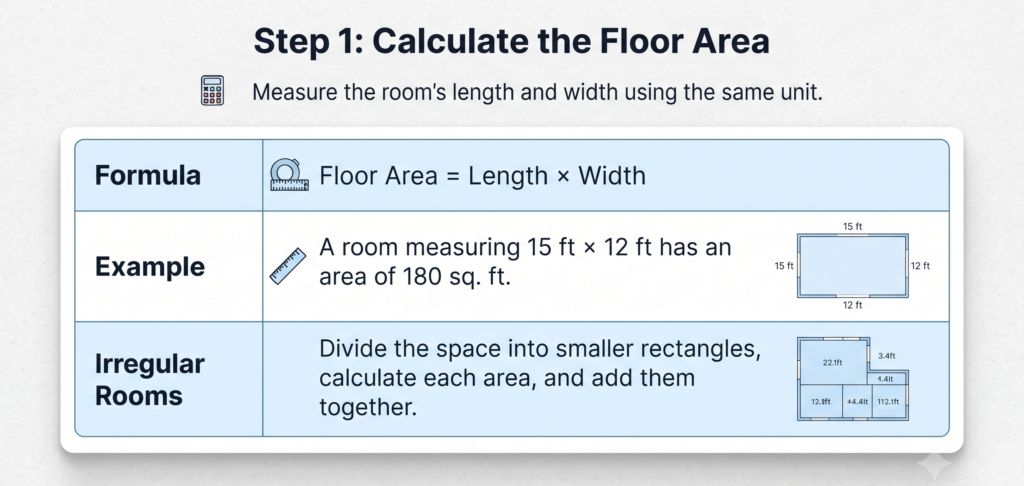
Step 1: Calculate the Floor Area

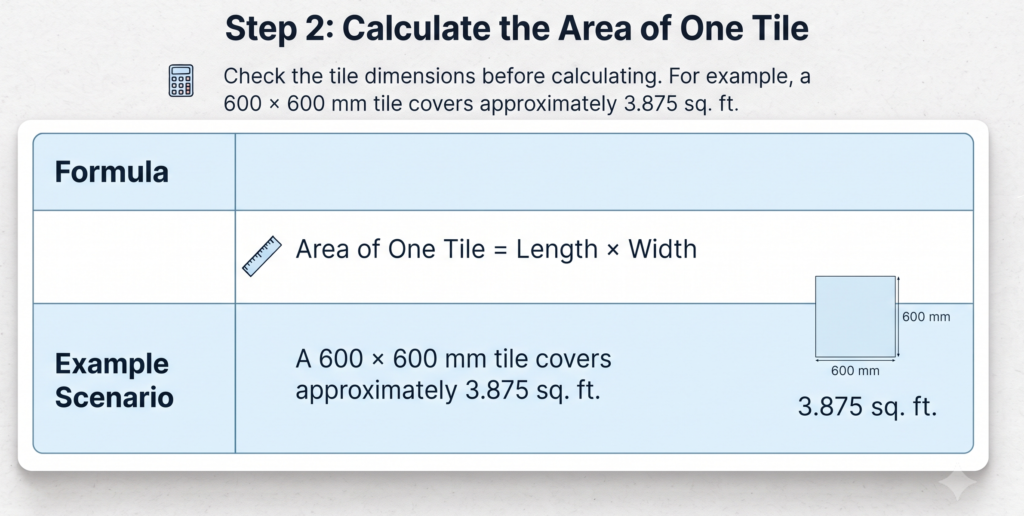
Step 2: Calculate the Area of One Tile

Check the tile dimensions before calculating. For example, a 600 × 600 mm tile covers approximately 3.875 sq. ft.

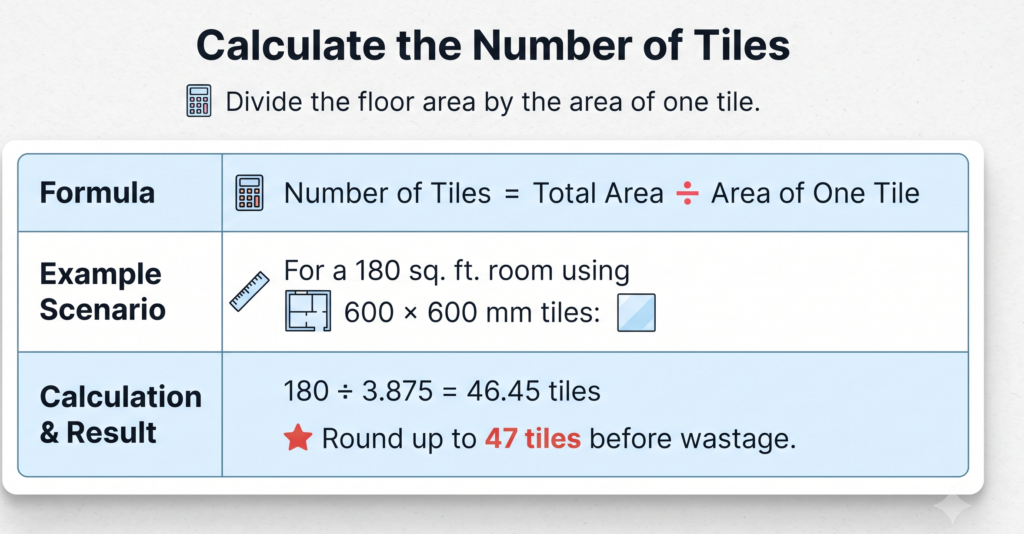
Step 3: How to Calculate Tiles for a Floor

Calculate The Number Of Tiles

Step 4: Add Extra Tiles for Wastage

Extra tiles account for cutting, breakage, and future repairs. As a general estimate:

  • Straight layout: 5–10% extra
  • Diagonal layout: 10–15% extra
  • Complex patterns: 15–20% extra

For the example above, adding approximately 10% means purchasing around 52 tiles. Actual requirements depend on the room layout, tile pattern, and installer recommendations.

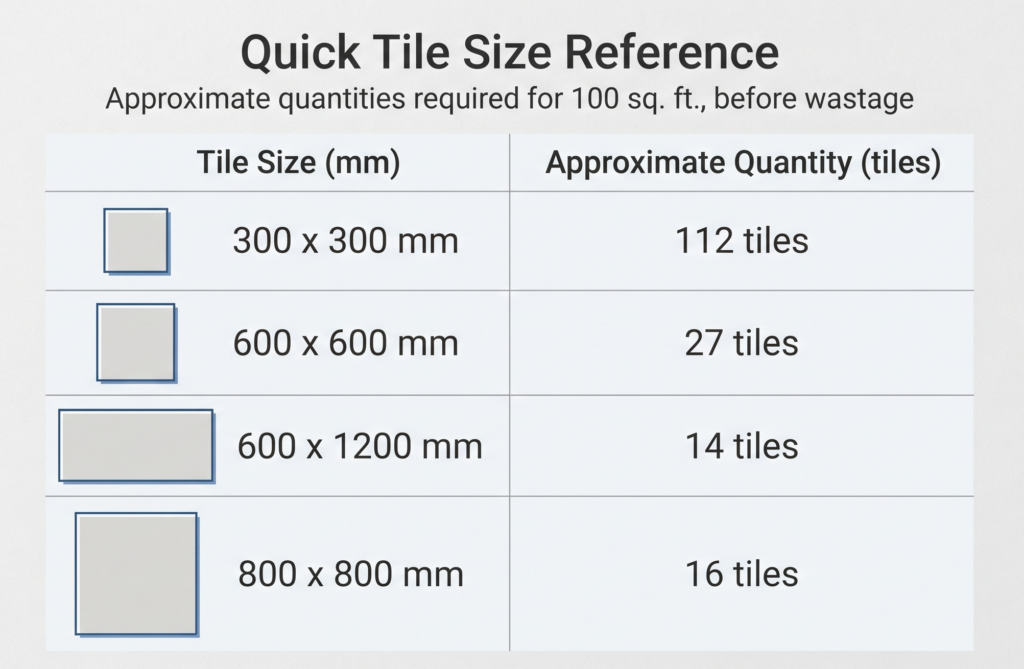
Quick-Tile-Size-Reference-scaled

How to Calculate Wall Tiles

To calculate wall tile requirements:

  1. Measure the height and width of each wall.
  2. Multiply them to calculate the wall area.
  3. Subtract door and window openings where appropriate.
  4. Divide the remaining area by the area of one tile.
  5. Add extra tiles for cutting and wastage.

For bathrooms, calculate the floor and each tiled wall separately before combining the quantities.

Common Tile Calculation Mistakes to Avoid

  • Measuring the room incorrectly.
  • Forgetting to include wastage.
  • Ignoring corners, doorways, and obstacles.
  • Buying exactly the calculated quantity without spare tiles.
  • Mixing different tile batches without checking shade and calibre.

Final Tips for Buying Tiles

Before ordering, confirm the tile size, coverage per box, pieces per box, shade, and calibre. Divide your total required quantity by the coverage per box and round up to the next whole box.

Keep spare tiles from the same batch for future repairs wherever practical.

Why Accurate Floor Tile Calculation Matters

Learning how to calculate tiles for a floor helps you estimate the quantity required for your project and plan your budget more effectively. Accurate measurements also help reduce unnecessary purchases and minimise material shortages during installation. Before ordering, always check the tile dimensions, box coverage, and recommended wastage allowance to ensure you purchase the right quantity for your space.

Explore Tiles with Ishan Worlds

Find tile designs for different spaces and styles at Ishan Worlds.

Why Choose ISHAN WORLD

When it comes to selecting the right tiles, sanitaryware, bathware, and bath fittings, ISHAN WORLD stands out as a trusted, all-in-one destination for quality, variety, and value. We offer a carefully curated selection of ceramic, porcelain, vitrified, double charge, and full body tiles—sourced from top manufacturing units using the latest technologies.

At ISHAN WORLD, we believe that every space deserves the perfect combination of design, durability, and price. Whether you’re building your dream home, renovating a bathroom, or designing a commercial project, our products match every taste and requirement. From elegant matt finishes to luxury sugar and carving tiles, we provide choices that are both aesthetic and functional.

Our expert guidance, transparent sourcing, and competitive pricing make tile selection easy and hassle-free. We don’t just sell tiles—we help you make informed decisions. Visit ISHAN WORLD today and experience the difference in quality, service, and style.

Join hands with one of India’s fastest-growing tile brands –Ishan World – and build a successful, hassle-free business with our FOFO model, PAS facility, expert support, and exclusive product range designed for modern India.

Connect with ISHAN WORLD to explore hallway tiles in many designs and styles, and create a welcoming and memorable hallway to make lasting impressions.

ISHAN WORLD – Build Beautiful. Live Better.

Contact Us : 7078270782

Visit Us : www.ishanworld.com

Write Us : info@ishanworld.com

Visit our social media handles

Instagram : Click here

Facebook : Click here

Whatsapp: Click here

Pinterest : Click here

Twitter : Click here

Youtube : Click here

Blogspot : Click here

Quora : Click here

Medium :Click here

LinkedIn : Click here

Divya Store : Click Here

Navya Store : Click Here

Express Store : Click Here For Sewla , Click Here For Firozabad
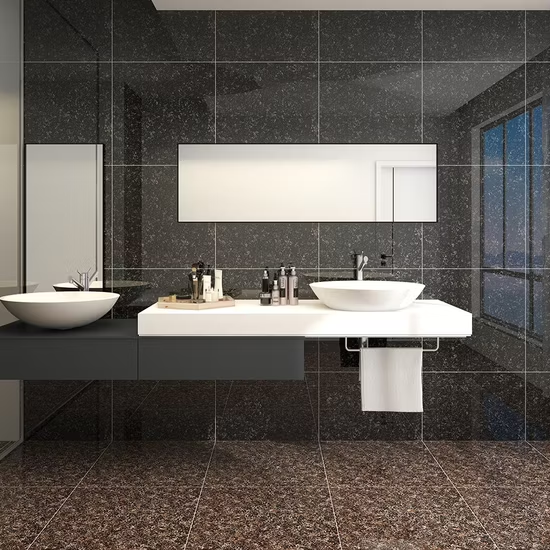
perfect wash basin height

What is the 100 % Perfect Wash Basin Height? Complete Bathroom Planning Guide

By : Ishan World

Designing a bathroom isn’t just about looks- it’s about comfort, usability, and smart planning. One of the most overlooked yet important aspects is the height of the wash basin. The right height ensures ease of use, better posture, and a seamless daily experience.

What Is the Perfect Wash Basin Height?

For most homes, the perfect wash basin height is between 80 and 85 cm (32 to 34 inches) from the finished floor to the top of the basin. This range works well for average adults, allowing comfortable use without bending too much or straining the arms.

However, this is not a fixed rule. The perfect wash basin height can be adjusted based on the user’s height, accessibility requirements, bathroom design, and personal comfort to ensure the best everyday experience.

How Vanity Type Affects the Perfect Wash Basin Height

The type of vanity or installation you choose directly impacts the final height of your wash basin.

Floor-Mounted Vanities

These units rest directly on the floor and usually come with built-in storage. The overall height, including the basin, naturally aligns within the standard 80–85 cm range, making them practical and convenient.

Wall-Mounted Vanities

Wall-hung basins offer flexibility. You can install them at a height that suits your comfort, but maintaining the top edge around 80–85 cm ensures ergonomic usage. These are ideal for modern bathrooms and also make cleaning easier.

Understanding Basin Designs and Their Heights

Different basin designs require slight adjustments in installation height:

  • Pedestal Basins: Classic in style, these are typically installed at standard height and conceal plumbing neatly.
  • Semi-Pedestal Basins: Compact and modern, mounted on the wall with partial floor support.
  • Countertop Basins: Installed above a counter, so the counter height is usually lower (around 75–78 cm) to balance the added basin height.
  • Under-Counter Basins: Fixed below the counter, giving a clean and seamless finish while maintaining standard height.
  • Integrated Basins: Built into the countertop, making maintenance easy and appearance sleek.

Choosing the Right Basin Shape

The shape of the basin also plays a role in both functionality and style:

  • Rectangular Basins: Highly versatile and suitable for most layouts
  • Round or Oval Basins: Softer design, ideal for countertops
  • Square Basins: Perfect for modern, minimal interiors
  • Corner Basins: Space-saving solution for compact bathrooms
  • Vessel/Bowl Basins: Decorative and commonly used in guest bathrooms

Material Matters: Style Meets Durability

Your basin material affects both maintenance and overall appearance. Here are common options:

  • Ceramic: Durable, affordable, and easy to clean
  • Stainless Steel: Modern look with strong resistance to stains
  • Stone/Resin: Premium finish with long-lasting durability
  • Glass: Stylish but requires careful handling

Choosing the right material ensures your basin stays functional and attractive over time.

Customizing Height for Different Users

Not every household has the same requirements. Adjusting basin height based on users can improve comfort:

  • Standard Adults: 80–85 cm
  • Tall Users: Slightly higher than 85 cm
  • Children or Shorter Individuals: Around 75 cm
  • Wheelchair Users: 75–80 cm with open space below for accessibility

Personalization makes a big difference in everyday usability.

Other Important Considerations

While height is crucial, don’t ignore these factors:

  • Space Planning: Ensure the basin doesn’t obstruct doors, cabinets, or fixtures
  • Design Harmony: Match the basin with your bathroom’s theme
  • Plumbing Alignment: Proper pipe positioning ensures smooth installation

These elements together create a well-balanced bathroom setup.


Final Thoughts: Choosing the Perfect Wash Basin Height

Selecting the perfect wash basin height is about more than following standard measurements it’s about creating a bathroom space that feels comfortable, practical, and easy to use every day. The right combination of height, design, and functionality improves convenience while making your bathroom more efficient and visually appealing.

A thoughtfully planned wash basin installation enhances posture, usability, and overall comfort. By choosing the perfect wash basin height based on your needs, bathroom layout, and basin design, you can create a stylish and user-friendly space that offers long-lasting value.

Why Choose ISHAN WORLD

When it comes to selecting the right tiles, sanitaryware, bathware, and bath fittings, ISHAN WORLD stands out as a trusted, all-in-one destination for quality, variety, and value. We offer a carefully curated selection of ceramic, porcelain, vitrified, double charge, and full body tiles—sourced from top manufacturing units using the latest technologies.

At ISHAN WORLD, we believe that every space deserves the perfect combination of design, durability, and price. Whether you’re building your dream home, renovating a bathroom, or designing a commercial project, our products match every taste and requirement. From elegant matt finishes to luxury sugar and carving tiles, we provide choices that are both aesthetic and functional.

Our expert guidance, transparent sourcing, and competitive pricing make tile selection easy and hassle-free. We don’t just sell tiles—we help you make informed decisions. Visit ISHAN WORLD today and experience the difference in quality, service, and style.

Join hands with one of India’s fastest-growing tile brands –Ishan World – and build a successful, hassle-free business with our FOFO model, PAS facility, expert support, and exclusive product range designed for modern India.

Connect with ISHAN WORLD to explore hallway tiles in many designs and styles, and create a welcoming and memorable hallway to make lasting impressions.

ISHAN WORLD – Build Beautiful. Live Better.

Contact Us : 7078270782

Visit Us : www.ishanworld.com

Write Us : info@ishanworld.com

Visit our social media handles

Instagram : Click here

Facebook : Click here

Whatsapp: Click here

Pinterest : Click here

Twitter : Click here

Youtube : Click here

Blogspot : Click here

Quora : Click here

Medium :Click here

LinkedIn : Click here

Divya Store : Click Here

Navya Store : Click Here

Express Store : Click Here For Sewla , Click Here For Firozabad
Frequently Asked Question

1. What is the standard height for a wash basin in a home?
The perfect wash basin height for most homes is between 80 to 85 cm (32 to 34 inches) from the finished floor to the top of the basin. This standard height provides comfortable usage for most adults while reducing unnecessary bending or arm strain.


2. Can I customize the wash basin height according to my family’s needs?
Yes, the perfect wash basin height can be customized based on the user’s requirements. For children or shorter individuals, around 75 cm may be more comfortable, while taller users may prefer a slightly higher installation. For wheelchair users, a height of 75–80 cm with proper knee clearance improves accessibility and comfort.


3. Does the type of basin or vanity affect the final height?
Yes, the installation type plays a major role. For instance, countertop basins require a lower counter height, while wall-mounted basins offer flexibility in setting the height. Floor-mounted vanities usually follow standard dimensions.


4. Which basin design is best for modern bathrooms?
Modern bathrooms commonly feature wall-mounted, countertop, and vessel basins because of their stylish appearance and design flexibility. The best basin choice depends on your bathroom size, daily usage, maintenance needs, and overall interior style.


5. What other factors should I consider besides height when choosing a wash basin?
Along with selecting the perfect wash basin height, consider factors such as bathroom space planning, plumbing alignment, basin material, storage requirements, and design compatibility. A balanced approach ensures a functional, comfortable, and visually appealing bathroom.


Tile Adhesive Standards

Who Defines Tile Adhesive Standards?

By: Ishan World

In today’s evolving construction landscape, tile installation is no longer just about aesthetics—it is about performance, durability, and long-term reliability. One of the most critical components behind a successful tile installation is tile adhesive.

This brings up an important question:
Who defines tile adhesive standards, and what do classifications like C1, C2, S1, and S2 mean?

At Ishan World, we believe that understanding product quality and technical standards helps customers make smarter choices. In this guide, we will explain the key tile adhesive standards, the organizations responsible for defining them, and why these classifications are important for achieving reliable and durable tile installations.

Why Tile Adhesive Standards Exist

Tile adhesives are used in a wide range of applications, including bathrooms, terraces, facades, high-rise buildings, and commercial spaces. Each of these environments requires specific performance characteristics such as:

  • Bond strength
  • Flexibility
  • Water resistance
  • Slip resistance

To ensure consistency and safety, standardized classification systems have been developed globally. These standards ensure that an adhesive performs reliably regardless of brand or location.

Global Authorities Defining Tile Adhesive Standards

1. EN 12004 – European Standard

EN 12004 tile adhesive standard is one of the most recognized global systems developed by the European Committee for Standardization (CEN). It defines the performance, testing methods, and classification of tile adhesives used for walls and floors.

This standard defines:

  • Types of adhesives (C, D, R)
  • Performance levels (C1, C2)
  • Special properties (T, E, S1, S2)

It establishes clear performance requirements, testing methods, and classification criteria for tile adhesives used on walls and floors.

Example:

  • C1 indicates a standard performance adhesive
  • C2 indicates a high-performance adhesive
  • S1 and S2 define levels of flexibility

EN 12004 has become a global benchmark and is widely referenced even outside Europe.


2. ISO 13007 – International Standard

ISO 13007 is developed by the International Organization for Standardization to bring uniformity across global markets.

  • Closely aligned with EN 12004
  • Ensures consistent classification and testing worldwide

This means that a C2 adhesive follows similar performance expectations across different countries.


3. Bureau of Indian Standards (BIS) – India’s Authority

In India, tile adhesive quality and compliance are governed by BIS.

  • Defines Indian Standards (IS codes)
  • Provides ISI certification
  • Ensures safety, reliability, and performance

BIS plays a crucial role in maintaining product quality and protecting consumer interests in the Indian market.


Understanding Tile Adhesive Classification (Simplified)

Tile adhesives are classified based on three key parameters:

1. Type (Material Composition)

  • C – Cementitious adhesives
  • D – Dispersion adhesives
  • R – Reaction resin adhesives

2. Class (Performance Level)

  • 1 – Standard performance
  • 2 – High performance

3. Additional Properties

  • T – Non-slip
  • E – Extended open time
  • S1 / S2 – Flexibility

Example:
C2TE S1 refers to a high-performance adhesive with non-slip properties, extended working time, and flexibility.

In today’s evolving construction landscape, tile installation is no longer just about aesthetics—it is about performance, durability, and long-term reliability. One of the most critical components behind a successful tile installation is tile adhesive.

But an important question arises:
Who defines the standards of tile adhesives, and what do classifications like C1, C2, S1, or S2 actually mean?

At Ishan World, we believe that informed customers make better decisions. This guide explains the global standards governing tile adhesives and why they matter for your projects.

Why These Standards Matter in Real Projects

Using the wrong adhesive can lead to:

  • Tile debonding
  • Surface cracks
  • Water seepage
  • Reduced durability

Modern applications, especially with large-format tiles and vitrified surfaces, demand adhesives with higher strength and flexibility. This makes adherence to proper standards essential for long-term performance.


Ishan World’s Expert Recommendation

At Ishan World, we recommend the following best practices:

  • Always verify adhesive classification before purchase
  • Select adhesives based on tile type and application area
  • Prefer products aligned with EN or ISO standards
  • Ensure compliance with BIS guidelines in India

The right adhesive is not just a supporting material; it is the foundation of a durable tile installation.


Conclusion

Tile adhesive standards are defined by a combination of global and national authorities to ensure safety, performance, and consistency.

  • EN 12004 serves as the global benchmark
  • ISO 13007 ensures international uniformity
  • BIS regulates quality within India

Understanding these standards helps homeowners, architects, and builders make informed and reliable choices.

About Ishan World

Ishan World is a trusted destination for tiles, sanitary ware, bathware, and complete surface solutions. We combine technical expertise with a curated product range to support homeowners, architects, and construction professionals in achieving high-quality results.

Why Choose ISHAN WORLD

When it comes to selecting the right tiles, sanitaryware, bathware, and bath fittings, ISHAN WORLD stands out as a trusted, all-in-one destination for quality, variety, and value. We offer a carefully curated selection of ceramic, porcelain, vitrified, double charge, and full body tiles—sourced from top manufacturing units using the latest technologies.

At ISHAN WORLD, we believe that every space deserves the perfect combination of design, durability, and price. Whether you’re building your dream home, renovating a bathroom, or designing a commercial project, our products match every taste and requirement. From elegant matt finishes to luxury sugar and carving tiles, we provide choices that are both aesthetic and functional.

Our expert guidance, transparent sourcing, and competitive pricing make tile selection easy and hassle-free. We don’t just sell tiles—we help you make informed decisions. Visit ISHAN WORLD today and experience the difference in quality, service, and style.

Join hands with one of India’s fastest-growing tile brands –Ishan World – and build a successful, hassle-free business with our FOFO model, PAS facility, expert support, and exclusive product range designed for modern India.

Connect with ISHAN WORLD to explore hallway tiles in many designs and styles, and create a welcoming and memorable hallway to make lasting impressions.

ISHAN WORLD – Build Beautiful. Live Better.

Contact Us : 7078270782

Visit Us : www.ishanworld.com

Write Us : info@ishanworld.com

Visit our social media handles

Instagram : Click here

Facebook : Click here

Whatsapp: Click here

Pinterest : Click here

Twitter : Click here

Youtube : Click here

Blogspot : Click here

Quora : Click here

Medium :Click here

LinkedIn : Click here

Divya Store : Click Here

Navya Store : Click Here

Express Store : Click Here For Sewla , Click Here For Firozabad
Frequently Asked Questions (FAQs)

1. Who defines tile adhesive standards globally?

Tile adhesive standards are defined by international and regional bodies such as EN 12004 and ISO 13007. These organizations establish classification systems, testing methods, and performance benchmarks to ensure product reliability across different markets.


2. What is the role of Bureau of Indian Standards (BIS) in tile adhesives?

The Bureau of Indian Standards (BIS) regulates quality and safety for construction materials in India. It provides IS certifications and ensures that tile adhesives meet national performance and durability requirements.


3. What does C1 and C2 mean in tile adhesives?

C1 and C2 refer to performance levels in cementitious adhesives under EN 12004:

  • C1 indicates standard performance adhesive
  • C2 indicates high-performance adhesive with stronger bonding strength

4. Why is it important to follow adhesive standards?

Following adhesive standards ensures proper bonding, durability, and safety. Using non-standard or incorrect adhesives can lead to tile failure, cracks, and water damage, especially in high-stress or wet areas.


5. How do I choose the right tile adhesive for my project?

You should select an adhesive based on tile type, surface condition, and application area. Always check classifications like C2, S1, or S2 and ensure the product complies with ISO 13007 or Bureau of Indian Standards guidelines for best results.

Tile Adhesive

Standard Grading For Tile Adhesive

By: Ishan World

Tiles have become one of the most popular surface materials used in modern construction. Whether it is residential flooring, commercial spaces, bathrooms, kitchens, or exterior facades, tiles provide durability, aesthetics, and easy maintenance. However, the performance of tiles largely depends on the quality of tile adhesive used for installation.

In India, tile adhesives are graded according to Bureau of Indian Standards (BIS) under the standard IS 15477. This standard defines different grades of adhesives based on their bond strength, flexibility, slip resistance, and application area.

Understanding these grades is essential for architects, builders, contractors, tile dealers, and homeowners to ensure proper tile installation and long-term durability.

What is Tile Adhesive?

Tile adhesive is a specialized bonding material used to fix tiles on floors, walls, and other surfaces. Unlike traditional cement-sand mortar, tile adhesives are factory-made dry mixes containing:

  • Cement
  • Graded sand
  • Polymer additives
  • Water-retention chemicals

These components provide strong bonding, flexibility, and better workability, making tile adhesives suitable for modern tiles such as vitrified, porcelain, and large-format tiles.

Why Standard Grading for Tile Adhesives is Important

Standard grading ensures that the adhesive meets specific performance criteria. Using the correct adhesive grade helps prevent common tile installation failures such as:

  • Tile debonding
  • Hollow tiles
  • Cracks
  • Slippage on vertical surfaces
  • Water damage

The grading system defined under IS 15477 classifies tile adhesives into Type 1, Type 2, Type 3, and Type 4 depending on their bond strength and application conditions.

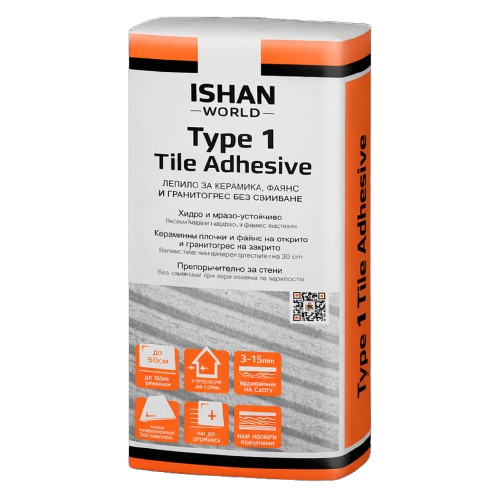
1. Type 1 Tile Adhesive

Type 1 is the basic grade adhesive used for standard tile installation on cementitious surfaces.

Key Characteristics

  • Normal bond strength
  • Suitable for small-size ceramic tiles
  • Used mainly for interior applications
  • Works well on cement plaster surfaces

Typical Applications

  • Indoor floors
  • Indoor walls
  • Kitchen backsplashes
  • Bathroom walls with small ceramic tiles

Suitable Tile Types

  • Ceramic tiles
  • Small wall tiles
  • Mosaic tiles

Advantages

  • Economical
  • Easy to apply
  • Good bonding with cement surfaces

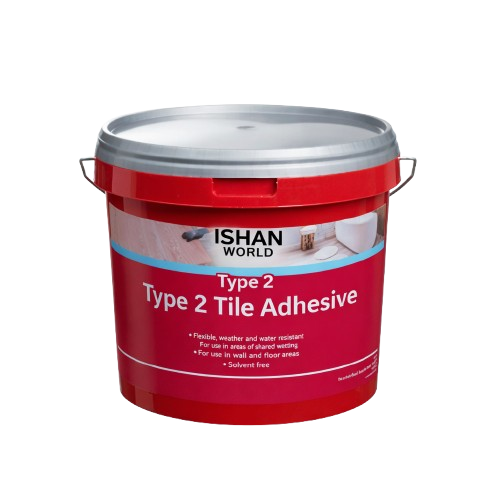
2. Type 2 Tile Adhesive

Type 2 adhesives are polymer-modified adhesives that provide stronger bonding compared to Type 1.

Key Characteristics

  • Higher bond strength
  • Better adhesion to vitrified tiles
  • Improved workability
  • Moderate flexibility

Typical Applications

  • Residential floors
  • Living rooms
  • Bedrooms
  • Medium traffic areas

Suitable Tile Types

  • Ceramic tiles
  • Vitrified tiles
  • Porcelain tiles

Advantages

  • Stronger bonding
  • Suitable for larger tiles
  • Better durability

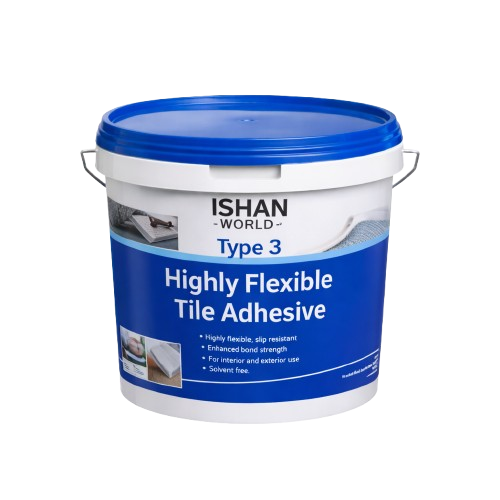
3. Type 3 Tile Adhesive

Type 3 adhesives are high-performance adhesives designed for heavy-duty tile installation.

Key Characteristics

  • High bond strength
  • Suitable for large and heavy tiles
  • Excellent adhesion
  • Higher resistance to temperature and moisture

Typical Applications

  • Commercial floors
  • Shopping malls
  • Airports
  • Industrial areas
  • Outdoor flooring

Suitable Tile Types

  • Vitrified tiles
  • Porcelain tiles
  • Large format tiles
  • Natural stones

Advantages

  • Strong bonding
  • Long-term durability
  • Suitable for high traffic areas
  • Good water resistance

4. Type 4 Tile Adhesive

Type 4 adhesives are premium-grade adhesives with superior bonding strength and flexibility.

Key Characteristics

  • Very high bond strength
  • Excellent flexibility
  • Suitable for challenging surfaces
  • Resistant to thermal movement

Typical Applications

  • Tile-on-tile installation
  • Exterior facades
  • Swimming pools
  • Industrial installations
  • High-rise buildings

Suitable Tile Types

  • Large format tiles
  • Porcelain tiles
  • Natural stone
  • Marble
  • Granite

Advantages

  • Maximum bonding strength
  • Prevents tile slipping
  • Ideal for vertical surfaces
  • Excellent performance in extreme conditions

Important Performance Properties in Tile Adhesives

Tile adhesives are evaluated based on several performance parameters.

1. Bond Strength

Bond strength refers to the force required to detach the tile from the surface. Higher bond strength ensures longer durability.

2. Slip Resistance

Slip resistance is important for wall tile installation. It prevents tiles from sliding down before the adhesive sets.

3. Open Time

Open time refers to the duration during which the adhesive remains workable after application.

4. Flexibility

Flexibility allows the adhesive to absorb structural movement and temperature changes without causing tile cracks.

5. Water Resistance

Adhesives used in bathrooms, kitchens, and swimming pools must have strong resistance to moisture.

Comparison of Tile Adhesive Grades

GradeBond StrengthSuitable TilesTypical Use
Type 1BasicCeramic tilesIndoor walls
Type 2ModerateCeramic, vitrifiedResidential floors
Type 3HighVitrified, porcelainCommercial areas
Type 4Very HighLarge tiles, natural stoneExterior & heavy duty

Benefits of Using Standardized Tile Adhesives

Following the IS 15477 grading system ensures:

  • Proper tile bonding
  • Long-lasting installations
  • Reduced maintenance
  • Better structural performance
  • Professional quality installation

For architects and construction professionals, selecting the right adhesive grade is as important as selecting the tile itself.

Future of Tile Adhesives in India

The Indian construction industry is rapidly adopting polymer-modified adhesives due to:

  • Larger tile sizes
  • Faster construction methods
  • High-rise buildings
  • Advanced tile materials

Manufacturers are also introducing flexible adhesives, quick-setting adhesives, and eco-friendly formulations to meet modern construction needs.

Conclusion

Tile adhesive grading plays a critical role in ensuring the strength, durability, and safety of tile installations. The classification defined under IS 15477 by the Bureau of Indian Standards helps professionals select the right adhesive for specific applications.

From Type 1 adhesives for basic ceramic tiles to Type 4 adhesives for large format and exterior installations, each grade serves a specific purpose.

Choosing the correct adhesive not only improves the performance of the tile installation but also ensures long-term durability and structural reliability.

For any construction or renovation project, understanding tile adhesive standards and grading is essential to achieving professional and long-lasting results.

Why Choose ISHAN WORLD

When it comes to selecting the right tiles, sanitaryware, bathware, and bath fittings, ISHAN WORLD stands out as a trusted, all-in-one destination for quality, variety, and value. We offer a carefully curated selection of ceramic, porcelain, vitrified, double charge, and full body tiles—sourced from top manufacturing units using the latest technologies.

At ISHAN WORLD, we believe that every space deserves the perfect combination of design, durability, and price. Whether you’re building your dream home, renovating a bathroom, or designing a commercial project, our products match every taste and requirement. From elegant matt finishes to luxury sugar and carving tiles, we provide choices that are both aesthetic and functional.

Our expert guidance, transparent sourcing, and competitive pricing make tile selection easy and hassle-free. We don’t just sell tiles—we help you make informed decisions. Visit ISHAN WORLD today and experience the difference in quality, service, and style.

Join hands with one of India’s fastest-growing tile brands – Ishan World – and build a successful, hassle-free business with our FOFO model, PAS facility, expert support, and exclusive product range designed for modern India.

Connect with ISHAN WORLD to explore hallway tiles in many designs and styles, and create a welcoming and memorable hallway to make lasting impressions.

ISHAN WORLD – Build Beautiful. Live Better.

Contact Us : 7078270782

Visit Us : www.ishanworld.com

Write Us : info@ishanworld.com

Visit our social media handles

Instagram : Click here

Facebook : Click here

Whatsapp: Click here

Pinterest : Click here

Twitter : Click here

Youtube : Click here

Blogspot : Click here

Quora : Click here

Medium :Click here

LinkedIn : Click here

Divya Store : Click Here

Navya Store : Click Here

Express Store : Click Here For Sewla , Click Here For Firozabad
Frequently Asked Question

1. What is tile adhesive grading according to IS 15477?

Tile adhesive grading according to IS 15477 is a classification system that defines different types of cement-based tile adhesives based on their bond strength, flexibility, and application area.
The standard is developed by the Bureau of Indian Standards (BIS) and divides adhesives into Type 1, Type 2, Type 3, and Type 4, each designed for specific tile types and installation conditions.


2. Which tile adhesive grade is best for vitrified tiles?

Vitrified tiles have very low water absorption, so they require stronger bonding compared to ceramic tiles.
Generally, Type 2 or Type 3 tile adhesive is recommended for vitrified tiles because these grades provide higher bond strength and better adhesion.


3. Can tile adhesive be used instead of cement mortar?

Yes, tile adhesive is widely used instead of traditional cement-sand mortar in modern construction.
Tile adhesives provide several advantages such as:

  • Better bonding strength
  • Reduced tile hollowness
  • Faster installation
  • Suitable for large-format tiles

Because of these benefits, tile adhesives are becoming the preferred choice in modern tile installation.


4. What is the difference between Type 1 and Type 4 tile adhesive?

The main difference lies in bond strength and application area.

  • Type 1: Basic adhesive used for ceramic tiles on interior walls and floors.
  • Type 4: Premium adhesive designed for large-format tiles, exterior applications, tile-on-tile installation, and heavy-duty environments.

Type 4 adhesives provide higher flexibility and stronger bonding compared to Type 1.


5. Why is it important to choose the correct tile adhesive grade?

Choosing the correct tile adhesive grade ensures proper tile bonding and long-term durability. Using the wrong adhesive can lead to issues such as:

  • Tile debonding
  • Hollow sound under tiles
  • Cracks in tiles
  • Water damage in wet areas

Selecting the appropriate adhesive grade according to tile type, surface condition, and installation area helps ensure a safe and durable tile installation.

Tile Adhesive

The Ultimate Guide to Tile Adhesive Grading

Ishan World

If you are planning a tiling project in India, you might have noticed that the days of using simple cement-sand slurry are fading. Today, Tile Adhesives are the gold standard. But walking into a hardware store can be confusing—you’ll see bags marked “Type 1,” “Type 2,” or “S1.”

What do these mean? And more importantly, which one should you choose?

This guide breaks down IS 15477:2019, the official Bureau of Indian Standards (BIS) code that governs tile adhesives. By the end of this post, you’ll know exactly which grade you need to ensure your tiles stick for a lifetime.

Why the Standard Changed 

In 2019, the Bureau of Indian Standards updated the old 2004 code to keep up with modern tile trends. We no longer just use small ceramic tiles; we now use massive vitrified slabs, glass mosaics, and natural stones on various surfaces like plywood and drywall.

The new standard classifies adhesives into five specific types (Type 1 to Type 5) based on their Chemical Composition and Mechanical Properties (like strength and flexibility).

  • Chemical Composition
  • Tensile Adhesion Strength
  • Shear Strength
  • Flexibility (Deformability)

The 5 Grades of Tile Adhesive Explained

Here is the breakdown of the five types of adhesives defined under IS 15477:2019.

1. Type 1: The General Purpose Adhesive

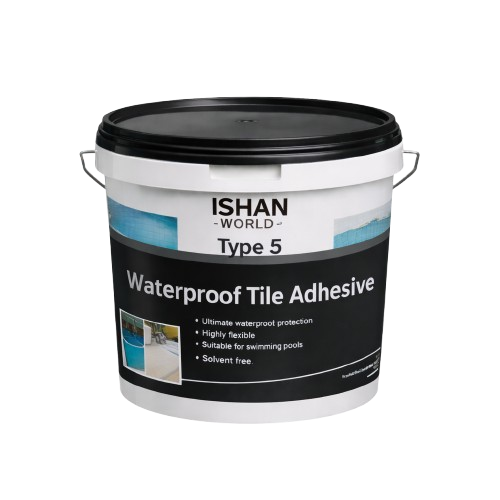
Tile Adhesive

This is the most basic polymer-modified adhesive. It relies largely on mechanical bonding.

  • Best For: Porous tiles like Ceramic or Clay tiles and Small format stones.
  • Application: Interior floors and walls.
  • Condition: Dry areas only (Bedroom, Living room).
  • Tile Size Limit: Generally up to 300mm x 300mm.
  • Technical Spec: Tensile Adhesion Strength ≥ 0.5 N/mm².

2. Type 2: The “Premium” Interior/Exterior Adhesive

This grade has a higher polymer content, allowing it to bond chemically with low-porosity surfaces.

  • Tile Size Limit: Works well for standard sizes (e.g., 600mm x 600mm).
  • Technical Spec: Tensile Adhesion Strength ≥ 1.0 N/mm².
  • Best For: Vitrified tiles, fully vitrified tiles, and Glass Mosaics.
  • Application: Interior (Floor & Wall) and Exterior (Floor only).
  • Condition: Wet areas like Bathrooms, Kitchens, and Balconies.
Tile adhesive

3. Type 3: The Exterior Wall Specialist

Tile Adhesive

Gravity is the enemy of wall tiles. Type 3 adhesives are formulated to hold heavier tiles on vertical exterior surfaces without slipping or de-bonding due to heat and rain.

  • Technical Spec: Shear Adhesion Strength ≥ 1.5 N/mm
  • Best For: Ceramic, Clay, Basalt, Vitrified, and Natural Stone.
  • Application: Exterior Walls (Facades) and concrete substrates.
  • Condition: Extreme weather exposure (Rain, direct sunlight).

4. Type 4: The Drywall & Plywood Specialist

Standard cement adhesives cannot stick to wood or gypsum because these materials vibrate and flex. Type 4 is highly flexible to absorb these movements.

  • Deformability: Must meet S1 or S2 standards (see below) depending on tile size.
  • Best For: Any tile installed on “Dry” substrates.
  • Substrates: Plywood, Gypsum Board, Cement Board, Medium Density Fibre (MDF).
  • Application: Interior partitions, wooden sub-floors.
Tile Adhesive

5. Type 5: The Toughest Bond (Metal & Glass)

Tile Adhesive

This is the “nuclear option” of adhesives. It is often a synthetic resin-based adhesive (like Epoxy or Polyurethane) rather than standard cement.

  • Technical Spec: Shear Adhesion Strength ≥ 6.0 N/mm² (Extremely high).
  • Best For: Engineered stones, Metal tiles, or synthetic materials.
  • Substrates: Metal surfaces (Grid iron, Steel, Aluminum), Glass.
  • Application: Elevators, industrial areas, modern architectural features.

Decoding the “S” Classes: Flexibility Matters

For Type 4 adhesives (and sometimes others), you will see an “S” rating.4 This refers to Transverse Deformation—or how much the adhesive can bend before it cracks.

  • S1 (Deformable): Can bend between 2.5mm and 5mm. Required for tiles larger than 600mm x 600mm on drywall.
  • S2 (Highly Deformable): Can bend more than 5mm. Required for massive slabs (e.g., 1200mm x 1200mm) or substrates with high vibration/movement.

Summary Comparison Chart

GradePrimary UseTile PorosityAdhesion Strength (Min)
Type 1Ceramics, Clay (Interior Dry)> 3% (High)0.5 N/mm²
Type 2Vitrified, Glass Mosaic (Wet Areas)< 3% (Low)1.0 N/mm²
Type 3Exterior Wall CladdingAny1.5 N/mm²
Type 4Drywall (Plywood/Gypsum)Any1.5 N/mm²
Type 5Metal & Glass SubstratesAny2.0 N/mm² (Tensile) / 6.0 (Shear)

Conclusion: How to Choose?

Choosing the wrong grade is the #1 reason for “popping” tiles and hollow sounds.

  • Renovating a Bathroom? Use Type 2.
  • Tiling a Bedroom Floor (Ceramic)? Type 1 is sufficient.
  • Cladding the Front of Your House? Never compromise—use Type 3.
  • Sticking Tiles to a Plywood Cabinet? You need Type 4.

Always check the bag for the IS 15477:2019 mark to ensure you are getting a product that has been rigorously tested for Indian construction conditions.

Why Choose ISHAN WORLD

When it comes to selecting the right tiles, sanitaryware, bathware, and bath fittings, ISHAN WORLD stands out as a trusted, all-in-one destination for quality, variety, and value. We offer a carefully curated selection of ceramic, porcelain, vitrified, double charge, and full body tiles—sourced from top manufacturing units using the latest technologies.

At ISHAN WORLD, we believe that every space deserves the perfect combination of design, durability, and price. Whether you’re building your dream home, renovating a bathroom, or designing a commercial project, our products match every taste and requirement. From elegant matt finishes to luxury sugar and carving tiles, we provide choices that are both aesthetic and functional.

Our expert guidance, transparent sourcing, and competitive pricing make tile selection easy and hassle-free. We don’t just sell tiles—we help you make informed decisions. Visit ISHAN WORLD today and experience the difference in quality, service, and style.

Join hands with one of India’s fastest-growing tile brands – Ishan World – and build a successful, hassle-free business with our FOFO model, PAS facility, expert support, and exclusive product range designed for modern India.

Connect with ISHAN WORLD to explore hallway tiles in many designs and styles, and create a welcoming and memorable hallway to make lasting impressions.

ISHAN WORLD – Build Beautiful. Live Better.

Contact Us : 7078270782

Visit Us : www.ishanworld.com

Write Us : info@ishanworld.com

Visit our social media handles

Instagram : Click here

Facebook : Click here

Whatsapp: Click here

Pinterest : Click here

Twitter : Click here

Youtube : Click here

Blogspot : Click here

Quora : Click here

Medium :Click here

LinkedIn : Click here

Divya Store : Click Here

Navya Store : Click Here

Express Store : Click Here For Sewla , Click Here For Firozabad

Frequently Asked Questions

1) What is the Indian Standard that defines tile adhesive grades in India?

Tile adhesives in India are classified under IS 15477:2019 (Adhesives for Use with Ceramic Tiles and Mosaics). This standard classifies adhesives into Type 1 to Type 5 primarily based on minimum tensile adhesion strength and shear adhesion strength under different conditions (dry, wet, heat aging). 


2) What do “Type 1” to “Type 5” actually mean—how are they different?

In IS 15477:2019, the “Type” indicates the performance class (bond strength and durability). In simple terms:

  • Type 1: basic cementitious adhesive for small, porous ceramic tiles in interior dry areas (lower bond-strength requirements).
  • Type 2: improved adhesive for low-porosity tiles (like vitrified/porcelain) and more demanding conditions including wet areas.
  • Type 3: higher-performance adhesive commonly used for exterior wall applications (more severe exposure).
  • Type 4: for drywall/board substrates (gypsum boards, plywood, cement boards, etc.), where some movement is expected.
  • Type 5: reactive resin adhesives (e.g., epoxy-type systems) with much higher shear strength for special applications.

This classification is backed by the standard’s minimum tensile/shear adhesion criteria and practical suitability guidance.


3) What are the minimum bond strength requirements in IS 15477:2019?

IS 15477:2019 specifies minimum tensile adhesion strength and shear adhesion strength thresholds by type. For example (selected key values):

  • Tensile adhesion strength (dry), minimum:
    Type 1: 0.5 N/mm², Type 2: 1.0, Type 3: 1.5, Type 4: 1.5, Type 5: 2.0
  • Shear adhesion strength (dry), minimum:
    Type 1: 1.0 N/mm², Type 2: 1.25, Type 3: 1.5, Type 4: 1.5, Type 5: 6.0

The standard also includes wet/heat-aging conditions (important for bathrooms, exteriors, terraces, etc.). 


4) What is the “slip” requirement, and why does it matter for wall tiles?

“Slip” (sag) is mainly relevant for vertical applications—it measures how much a tile slides down after installation. As per IS 15477:2019, when tested by the standard method, slip should not be more than 0.5 mm.

Why it matters: if slip is high, tiles can droop, grout lines become uneven, and heavy wall tiles may slowly creep down before the adhesive sets. 


5) How do I choose the correct IS 15477 “Type” for my project (quick rules)?

A practical selection approach aligned with the intent of IS 15477:2019:

  • Small ceramic wall/floor tiles in a dry room: usually Type 1 is adequate.
  • Vitrified/porcelain tiles, bathrooms, kitchens, wet zones: generally Type 2 or higher.
  • Exterior wall cladding / elevations exposed to weather: commonly Type 3.
  • Gypsum boards, plywood, cement boards, bison panel (drywall systems): Type 4 (designed for such substrates).
  • Industrial areas / chemical exposure / special substrates: Type 5 reactive resin systems may be used.

Tiles vs Marble

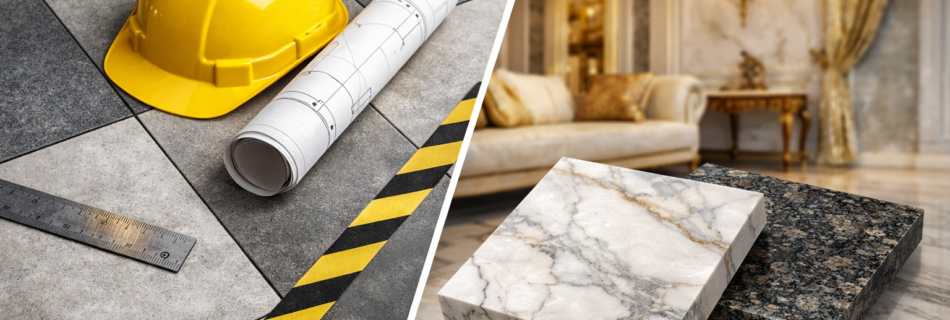
Tiles vs Marble: Complete Technical Comparison for Architects, Designers & Homeowners

Ishan World

Choosing the right surface material is not only about appearance—it is about performance, durability, maintenance, safety, and long-term value. Whether you are designing a luxury home, a commercial showroom, or a high-traffic space, understanding the technical differences between Tiles vs Marble helps you make the right choice for your project.

This guide provides a clear and practical comparison of different tile categories and natural stones based on important factors such as water absorption, strength, slip resistance, stain resistance, abrasion resistance, maintenance, and overall performance. By understanding these key differences, architects, designers, and homeowners can select the ideal flooring solution that matches their design requirements and usage needs.

Types Covered

Technical Comparison Table – Tiles

ParameterCeramicPorcelainVitrifiedDouble ChargeFull BodySemi-VitrifiedSoluble Salt
Water Absorption5–7%3–4%0.0–0.5%0.0–0.5%0.0–0.5%2%0.0–0.5%
Flexural Strength (MOR)15–20 N/mm²30–5030–4035–5040–5525–3525–35
Thickness Tolerance±0.5 mm±0.3 mm±0.2–0.5 mm±0.2 mm±0.2 mm±0.5 mm±0.3 mm
Surface Flatness±0.5%±0.3%±0.2–0.3%±0.2%±0.2%±0.5%±0.3%
Stain ResistanceClass 3–4Class 3–4Class 5Class 5Class 5Class 3–4Class 4–5
Slip Resistance (Wet CoF)≥ 0.4≥ 0.6≥ 0.6≥ 0.6≥ 0.6≥ 0.5≥ 0.6
Abrasion Resistance (PEI)PEI 2–3PEI 3–5PEI 4–5PEI 4–5PEI 5PEI 2–3PEI 3–4

📊 2️⃣ Technical Comparison Table – Marble & Stone

ParameterGraniteWhite MarbleNatural Stone
Water Absorption0.2–0.5%4–8%1–6%
Flexural Strength12–25 N/mm²6–155–12
Thickness Tolerance±1 mm±1.5 mm±2–3 mm
Surface Flatness0.03%0.05%0.08%
Stain ResistanceClass 4–5Class 2–3Class 1–2
Slip Resistance≤ 0.5< 0.4≥ 0.6
Abrasion Resistance (PEI)PEI 4–5PEI 2–3PEI 1–2

What Do These Parameters Mean? (Simple Explanation)

TermMeaningWhy It Matters
Water AbsorptionHow much water material absorbsLower = better for bathrooms, outdoors
Flexural Strength (MOR)Bending strengthHigher = better load bearing
PEI RatingScratch resistanceHigher = better for high traffic
Slip Resistance (CoF)Grip when wetHigher = safer for bathrooms, outdoors
Stain ResistanceHow easily stains penetrateHigher = easier cleaning
Thickness ToleranceManufacturing accuracyLower = better installation quality

Tiles vs Marble – Performance Comparison

FeatureTilesMarble / Stone
Water ResistanceExcellentGood
StrengthStrongestSlightly Stronger
MaintenanceLowHigh
UniformityFactory controlledNatural variations
Cost StabilityBudget to PremiumExpensive
Design VarietyUnlimitedLimited
Crack ResistanceHighLow
Long-term DurabilityHighMedium
Replacement CostLowVery High

Tiles are technically superior for functional areas, while marble is mainly used for aesthetic luxury zones.

Residential Use

AreaBest ChoiceReason
Living RoomVitrified / Full Body TileDurable + stain resistant
KitchenPorcelain / Vitrified TileLow water absorption
BathroomAnti-skid VitrifiedHigh CoF = safety
BedroomSemi-Vitrified / Soluble SaltCost-effective
BalconyFull Body / Outdoor TileWeather resistant

🔹 Commercial Use

AreaBest ChoiceReason
ShowroomDouble Charge / Full Body TileHigh PEI
MallFull Body TileHeavy footfall
Hotel LobbyPolished VitrifiedPremium look + durability
HospitalPorcelain TileHygiene + low absorption
OfficeVitrified TileMaintenance-friendly

Outdoor / Heavy Load

AreaBest Choice
ParkingFull Body Tile
PathwaysOutdoor Anti-Skid Tiles
Exterior WallsPorcelain Cladding

Cost vs Maintenance Comparison

FactorTilesMarble
Initial CostLow–MediumHigh
InstallationEasySkilled labor
PolishingNot neededRegular
Stain ProtectionInbuilt glazeNeeds chemical sealant
ReplacementEasyDifficult
Long-Term CostLowHigh

Final Recommendation (Expert Verdict)

When comparing Tiles vs Marble, the right choice depends on your project requirements, usage, and design expectations.

✔ If your project demands:

  • High durability
  • Low maintenance
  • Safety
  • Cost efficiency
  • Design variety

👉 Tiles are the more practical and technically advanced flooring solution for modern residential, commercial, and high-traffic spaces.

✔ Marble and natural stone remain an excellent choice for luxury areas where premium appearance, unique patterns, and a classic look are the main priorities. However, they generally require more maintenance and higher investment compared to modern tile solutions.

For most projects, choosing the right tile based on application, quality, and performance requirements can provide long-lasting beauty and functionality.

Why Choose ISHAN WORLD

When it comes to selecting the right tiles, sanitaryware, bathware, and bath fittings, ISHAN WORLD stands out as a trusted, all-in-one destination for quality, variety, and value. We offer a carefully curated selection of ceramic, porcelain, vitrified, double charge, and full body tiles—sourced from top manufacturing units using the latest technologies.

At ISHAN WORLD, we believe that every space deserves the perfect combination of design, durability, and price. Whether you’re building your dream home, renovating a bathroom, or designing a commercial project, our products match every taste and requirement. From elegant matt finishes to luxury sugar and carving tiles, we provide choices that are both aesthetic and functional.

Our expert guidance, transparent sourcing, and competitive pricing make tile selection easy and hassle-free. We don’t just sell tiles—we help you make informed decisions. Visit ISHAN WORLD today and experience the difference in quality, service, and style.

Join hands with one of India’s fastest-growing tile brands – Ishan World – and build a successful, hassle-free business with our FOFO model, PAS facility, expert support, and exclusive product range designed for modern India.

Connect with ISHAN WORLD to explore hallway tiles in many designs and styles, and create a welcoming and memorable hallway to make lasting impressions.

ISHAN WORLD – Build Beautiful. Live Better.

Contact Us : 7078270782

Visit Us : www.ishanworld.com

Write Us : info@ishanworld.com

Visit our social media handles

Instagram : Click here

Facebook : Click here

Whatsapp: Click here

Pinterest : Click here

Twitter : Click here

Youtube : Click here

Blogspot : Click here

Quora : Click here

Medium :Click here

LinkedIn : Click here

Divya Store : Click Here

Navya Store : Click Here

Express Store : Click Here For Sewla , Click Here For Firozabad

Frequently Asked Question

1. Are tiles better than marble for long-term use?
Yes. Compared to marble, tiles offer better durability, stain resistance, easier maintenance, and consistent performance for long-term residential and commercial use.

2. Which tile is best for high-traffic areas?
For high-traffic areas, Full Body and Double Charge vitrified tiles are excellent choices due to their high strength, abrasion resistance, and long-lasting performance.

3. Can marble be used in bathrooms?
Marble can be used in bathrooms, but it requires careful selection and maintenance. Due to its higher water absorption and potential slip risk, tiles with anti-skid properties are often a more practical choice for wet areas.

4. Are vitrified tiles suitable for outdoor use?
Yes. Outdoor-grade vitrified tiles with anti-skid surfaces are suitable for outdoor applications as they provide better safety, durability, and resistance against weather conditions.

5. Which is more cost-effective: tiles or marble?
Tiles are generally more cost-effective than marble because they offer lower installation costs, easier maintenance, greater design options, and better long-term value.

Why Tile Franchise is a Smart Business in 2026

How Can I Compare the Difference Between Various Types of Tile Franchise?

Ishan World

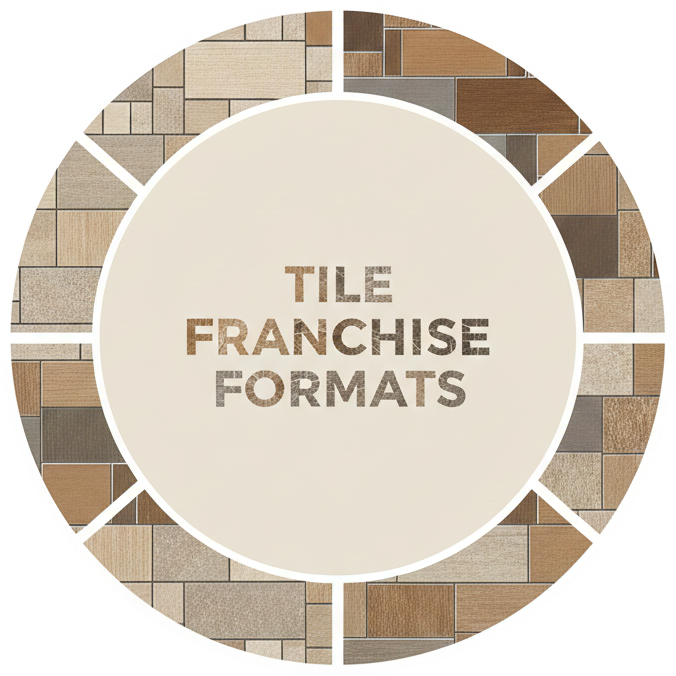
Choosing the right tile franchise is a big business decision. With multiple formats like Ishan World Express, Navya, Divya, Divya Depot, Sanglobe, DC L-1, DC L-2, Depot V-3, and Depot V-1, many investors get confused about which model suits them best.

In this blog, we’ll explain how to compare different tile franchise models, what factors matter the most, and which type of tile franchise is ideal for you based on investment, location, space, and business goals.

Understand Different Tile Franchise Formats

Not every tile franchise works the same way. Tile brands usually offer multiple business formats based on:

  • Store size
  • Investment capacity
  • City type
  • Target customer segment

Major Tile Franchise Models Explained

Franchise ModelIdeal ForFocus SegmentCity Type
Ishan World ExpressSmall investorsEntry LevelTown Level
Ishan World NavyaMedium investorsEntry to Mid LevelCity Level
Ishan World DivyaPremium showroomsMid to High LevelMajor Cities
Ishan World Divya DepotLarge distributorsEntry to High LevelDistrict Level
Ishan World SanglobeCompact outletMid LevelTown Level
Ishan World DC L-1Local distribution hubEntry LevelDistrict Level
Ishan World DC L-2Bigger DCEntry to High LevelDistrict Level
Ishan World Depot V-3Territory warehouseMid to High LevelCertain Territory
Ishan World Depot V-1Small warehouseEntry / Mid LevelCertain Territory

👉 Tip: Retail formats are for walk-in customers, while Depot/DC models are for bulk supply and dealer networks.

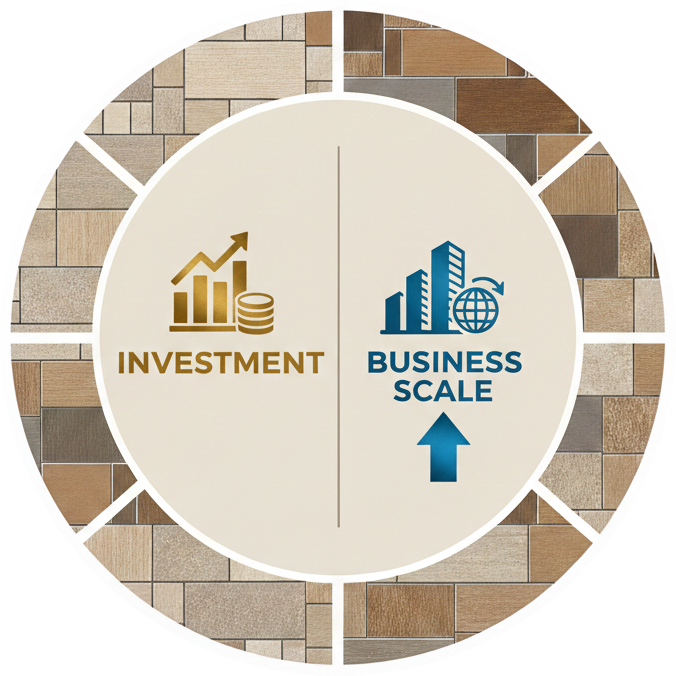
Compare Investment vs Business Scale

Investment decides how big your business will be and what kind of customer segment you will serve.

Your investment also defines the scale of operations, showroom experience, stock availability, and

how premium your brand positioning will be in the market.

Investment Comparison Table

Franchise TypeApprox InvestmentBest For
Express₹22.5 LacFirst-time entrepreneurs
Navya₹42 LacGrowing cities
Divya₹1.50 CrPremium showroom investors
Divya Depot₹2.25 CrLarge-scale distributors
Sanglobe₹22.5 LacCompact retail
DC L-1₹65 LacDistrict-level supply
DC L-2₹1.80 CrLarge DC operations
Depot V-3₹80 LacTerritory distribution
Depot V-1₹15 LacSmall depot setup

👉 Rule of thumb: ✔ Lower investment = retail focused ✔ Higher investment = wholesale & distribution focused

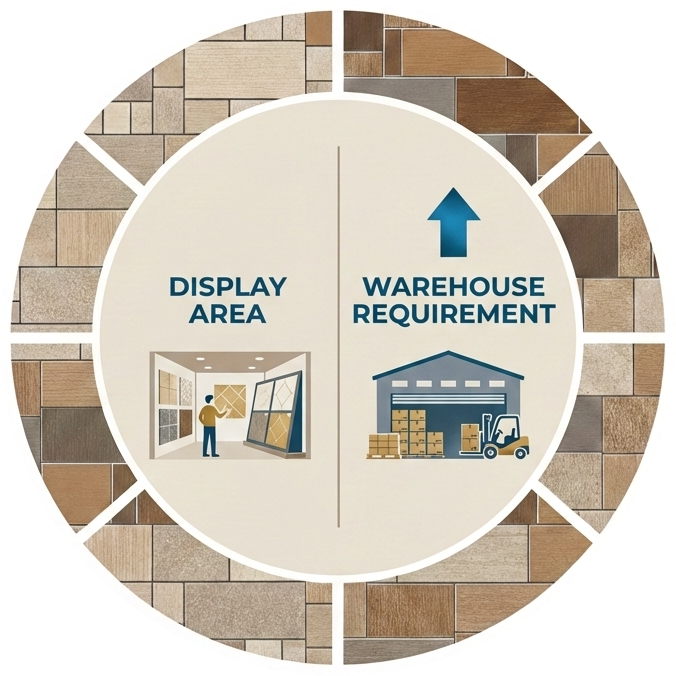
Compare Display Area & Warehouse Requirement

Tile business is space-driven. Bigger formats = more stock = better availability.

Tile business is truly space-driven. The bigger your showroom or warehouse format, the more stock you can display and store, which directly improves product variety and ready availability for customers. Larger formats allow you to showcase premium collections, big slabs, and multiple design options, helping you serve higher-value customer segments and close deals faster. In simple terms, more space = more choice, better availability, and bigger business potential.

Space Comparison Table

ModelTotal Area (Approx)Display AreaWarehouse
Express1000 sq ft800 sq ft200 sq ft
Navya2650 sq ft2400 sq ft250 sq ft
Divya6700 sq ft6000 sq ft700 sq ft
Divya Depot35000 sq ft15000 sq ft20000 sq ft
Sanglobe1000 sq ft800 sq ft200 sq ft
DC L-15500 sq ft500 sq ft5000 sq ft
DC L-220600 sq ft600 sq ft20000 sq ft
Depot V-38500 sq ft500 sq ft8000 sq ft
Depot V-12000 sq ft150 sq ft1850 sq ft

👉 Retail model = more display space 👉 Depot model = more warehouse space

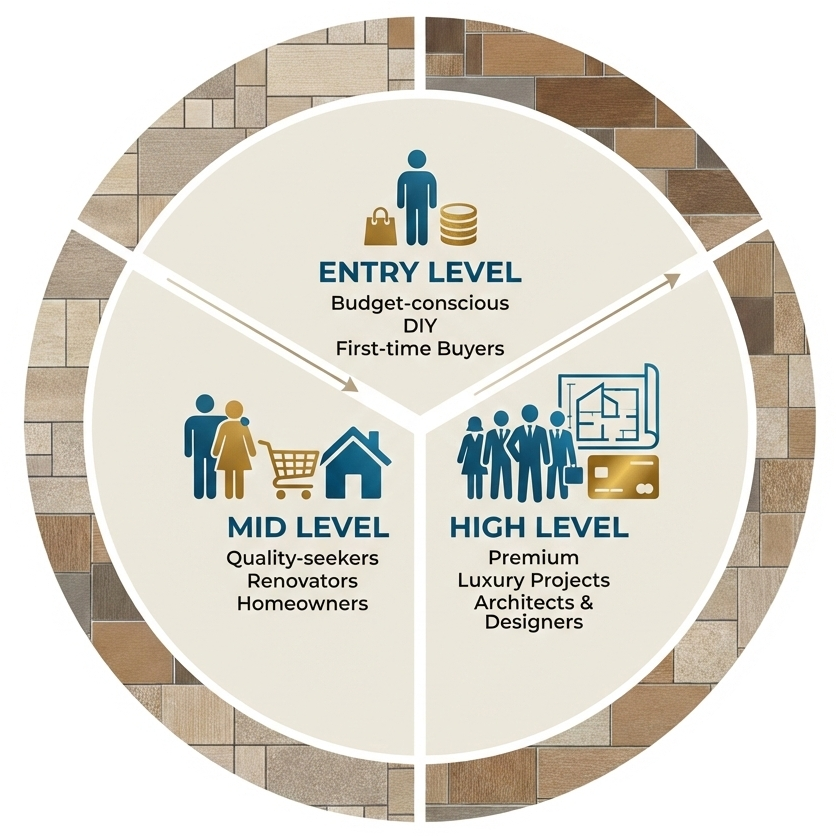
Compare Target Customer Segment

Each tile franchise format is designed to serve a different customer profile and buying behavior. Smaller formats focus on walk-in retail customers and local renovation needs, while larger formats attract premium home buyers, architects, builders, and bulk buyers looking for wider choices and ready stock. The format you choose decides your product range, pricing strategy, and the type of customers you cater to—so the right format helps you target the right market and grow profitably.

Each tile franchise format serves a different customer profile:

ModelTarget Segment
ExpressEntry-level buyers
NavyaEntry to mid-level homes
DivyaMid to high-end homes
Divya DepotAll segments (bulk supply)
SanglobeMid-level buyers
DC L-1Entry-level retailers
DC L-2Entry to high-end retailers
Depot V-3Mid to high-level market
Depot V-1Entry & mid retailers

👉 If your area has budget housing demand, Express is better.
👉 If your area has luxury projects, Divya is better.

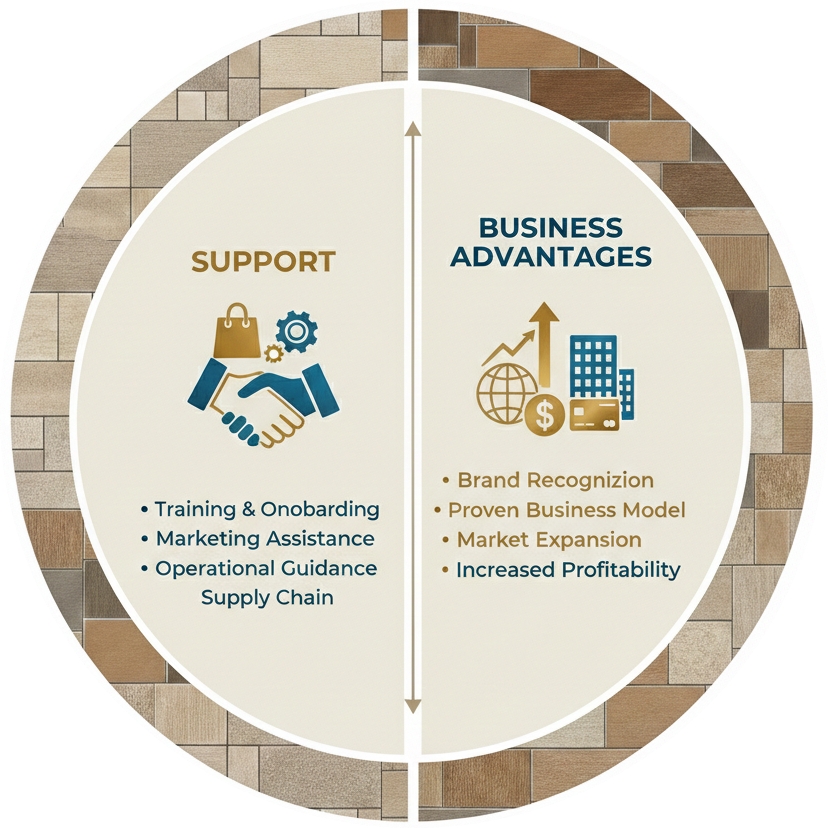
Compare Support & Business Advantages

Most professional tile franchises offer end-to-end support, but premium models get extra advantages.

Compare Support & Business Advantages – Ishan World Franchise Models

Support / ModelExpressNavyaDivyaDivya DepotSanglobeDC L-1DC L-2Depot V-3Depot V-1
Inventory Back-up from DC✅✅✅✅✅✅✅✅✅
Employee Training & Hiring Support✅✅✅✅✅✅✅✅✅
Tech Support✅✅✅✅✅✅✅✅✅
Marketing Support✅✅✅✅✅✅✅✅✅
VM (Visual Merchandising) Support✅✅✅✅✅✅✅✅✅
PAS / APS Facility✅✅✅✅✅✅✅✅✅
Dedicated Monitoring❌✅✅❌❌✅✅✅❌
Free Sample Support*❌ / Limited❌ / Limited❌ / Limited❌ / Limited❌ / Limited✅✅✅❌ / Limited
Assigned Territory Manager❌❌❌❌❌✅✅❌❌
Breakage Support from Company❌ / Limited❌ / Limited❌ / Limited❌ / Limited❌ / Limited✅✅❌ / Limited❌ / Limited
Overall Support LevelBasicModeratePremium (Retail)High (Bulk)BasicMaximumMaximum+HighBasic–Moderate

ROI & Franchise Model Type

FactorDetails
ROI / Payback PeriodApprox 5 Years
Business ModelFOFO (Franchise Owned, Franchise Operated)
Other OptionsFOCO / COCO (Brand dependent)

👉 FOFO means you own the outlet, you run the business, you earn full profit.

How to Choose the Right Tile Franchise for You?

Ask yourself these questions:

✔ What is my budget?
✔ Do I want retail customers or bulk dealers?
✔ How big is my location space?
✔ Is my market entry-level or premium?
✔ Do I want high turnover or high margin?

Recommendation Guide

Your ProfileBest Franchise
Small Town + Low BudgetExpress / Sanglobe
City + Medium BudgetNavya
Metro City + Premium CustomersDivya
Wholesale BusinessDC L-1 / DC L-2
Territory DistributorDepot V-3 / Divya Depot

Why Tile Franchise is a Smart Business in 2026

Tiles are a non-seasonal product with repeat demand from:

  • New construction
  • Renovation
  • Commercial projects
  • Builders & contractors

Compared to marble or stone, tiles offer better margin, easier logistics, less breakage, and wider design options, making tile franchise models more scalable and profitable.

Final Conclusion

Comparing tile franchise models is not about which one is cheaper, but about which one matches your market, budget, and business vision.

✔ Small investment? → Go for Express
✔ Premium showroom? → Choose Divya
✔ Distribution business? → Choose DC / Depot formats

If you align the right franchise model with the right location, tile business can become a high-growth, long-term profitable venture.

Why Choose ISHAN WORLD

When it comes to selecting the right tiles, sanitaryware, bathware, and bath fittings, ISHAN WORLD stands out as a trusted, all-in-one destination for quality, variety, and value. We offer a carefully curated selection of ceramic, porcelain, vitrified, double charge, and full body tiles—sourced from top manufacturing units using the latest technologies.

At ISHAN WORLD, we believe that every space deserves the perfect combination of design, durability, and price. Whether you’re building your dream home, renovating a bathroom, or designing a commercial project, our products match every taste and requirement. From elegant matt finishes to luxury sugar and carving tiles, we provide choices that are both aesthetic and functional.

Our expert guidance, transparent sourcing, and competitive pricing make tile selection easy and hassle-free. We don’t just sell tiles—we help you make informed decisions. Visit ISHAN WORLD today and experience the difference in quality, service, and style.

Join hands with one of India’s fastest-growing tile brands – Ishan World – and build a successful, hassle-free business with our FOFO model, PAS facility, expert support, and exclusive product range designed for modern India.

Connect with ISHAN WORLD to explore hallway tiles in many designs and styles, and create a welcoming and memorable hallway to make lasting impressions.

ISHAN WORLD – Build Beautiful. Live Better.

Contact Us : 7078270782

Visit Us : www.ishanworld.com

Write Us : info@ishanworld.com

Visit our social media handles

Instagram : Click here

Facebook : Click here

Whatsapp: Click here

Pinterest : Click here

Twitter : Click here

Youtube : Click here

Blogspot : Click here

Quora : Click here

Medium :Click here

LinkedIn : Click here

Divya Store : Click Here

Navya Store : Click Here

Express Store : Click Here For Sewla , Click Here For Firozabad

Frequently Asked Question ( FAQs)

1. Which Ishan World franchise model is best for starting a tile business?
Every Ishan World franchise model is designed for a specific business goal. Express and Sanglobe are excellent for first-time investors, Navya and Divya are perfect for city and premium markets, while DC and Depot formats are ideal for large-scale distribution. The “best” model is the one that matches your budget, location, and growth vision.


2. Are higher investment franchises always more profitable than smaller ones?
Not necessarily. High-investment formats like Divya, DC L-2, and Divya Depot offer bigger scale and higher turnover potential, while smaller formats like Express, Sanglobe, and Depot V-1 offer faster break-even and lower risk. Each franchise model is profitable when aligned with the right market demand.


3. Do smaller franchise formats also get full company support?
Yes. All Ishan World franchise models receive strong core support such as inventory back-up, training, tech support, marketing, VM support, and APS/PAS facilities. Premium and distribution formats get additional advantages, but smaller formats are equally supported for stable and sustainable growth.


4. Can I upgrade from a smaller franchise model to a bigger one in the future?
Absolutely. Ishan World franchise models are designed to grow with you. Many partners start with Express or Navya and later expand into Divya, DC, or Depot formats as their market presence and business scale increase. This flexibility makes every franchise model a smart long-term choice.


5. Are depot and DC franchise models better than retail showroom formats?
Depot and DC models are excellent for bulk supply and dealer networks, while retail formats are best for direct customer sales and brand visibility. Both models are equally powerful in their own segment—retail gives higher margins per sale, and depots/DC give higher volume and market control. Choosing either means choosing a strong business model, just with a different growth strategy.

Tiles And Marble

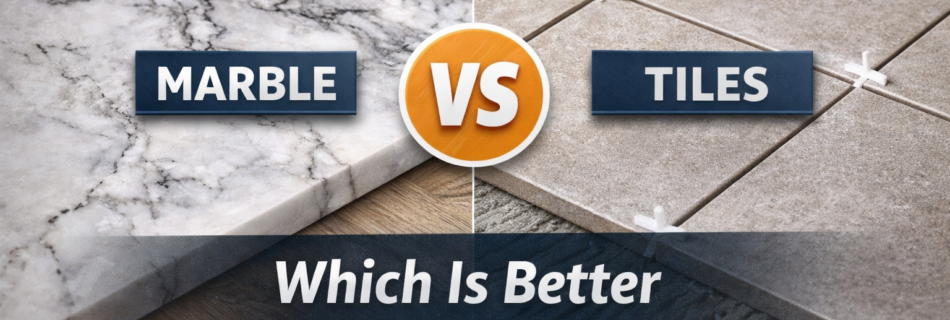
Marble vs. Tiles: Which Is Better for Your Home?

By : Ishan World

When planning a new home or renovating an existing space, one of the most important decisions homeowners face is choosing the right flooring and wall material. Among the most popular options, marble and tiles often stand at the top of the list. Both materials are beautiful, durable, and widely used—but which one is truly better for your home?

In this detailed guide, we compare marble and tiles across design, durability, maintenance, cost, performance, and suitability for modern homes. By the end, you will clearly understand why tiles are the smarter and more practical choice for today’s homeowners.

Understanding Marble and Tiles

What is Marble?

Marble is a natural stone formed from limestone under high pressure and temperature. It is quarried from mountains and cut into slabs and tiles. Known for its natural veins and luxurious appearance, marble has been used for centuries in palaces, monuments, and premium homes.

What are Tiles?

Tiles are manufactured surface materials made from ceramic, vitrified clay, porcelain, quartz, or composite materials. Modern tile technology allows tiles to replicate the look of marble, wood, concrete, and stone with far greater strength and consistency. Tiles are available in a wide variety of sizes, finishes, colors, and textures for walls and floors.

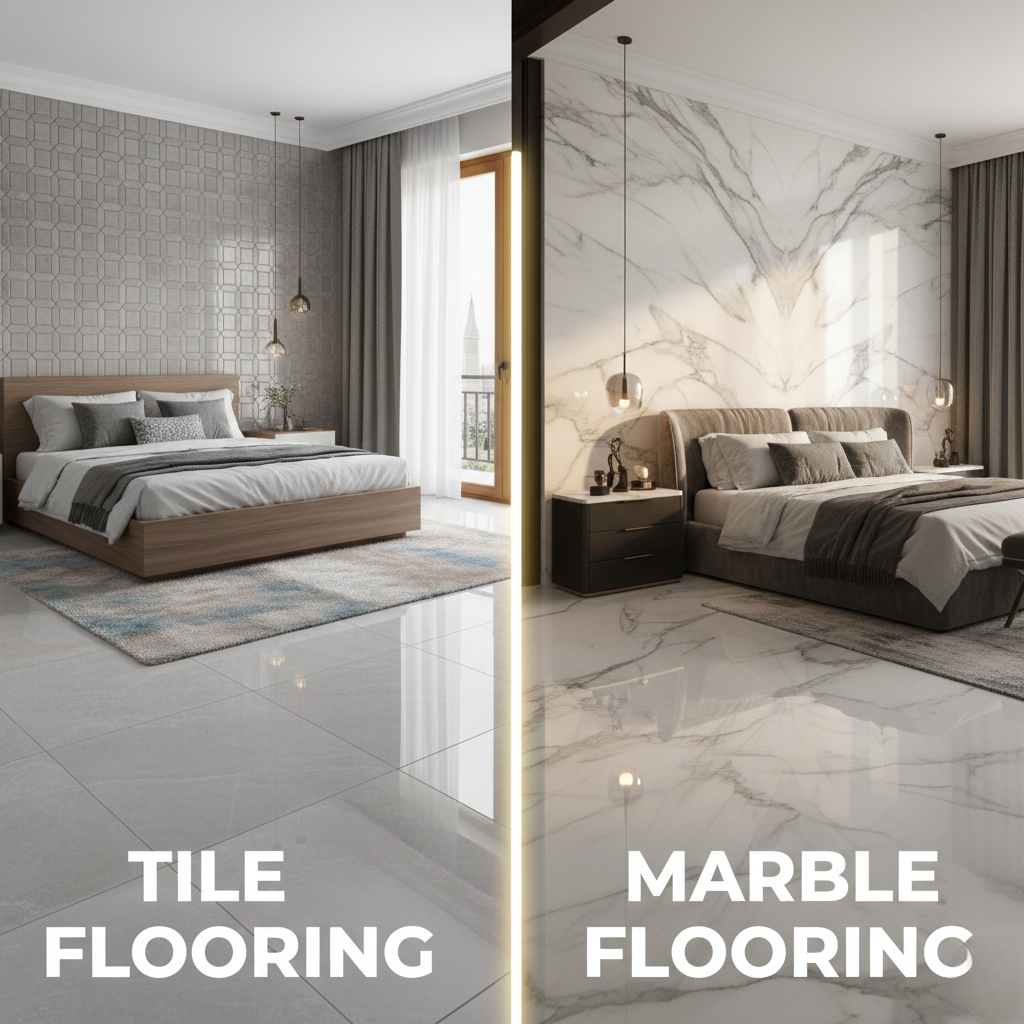
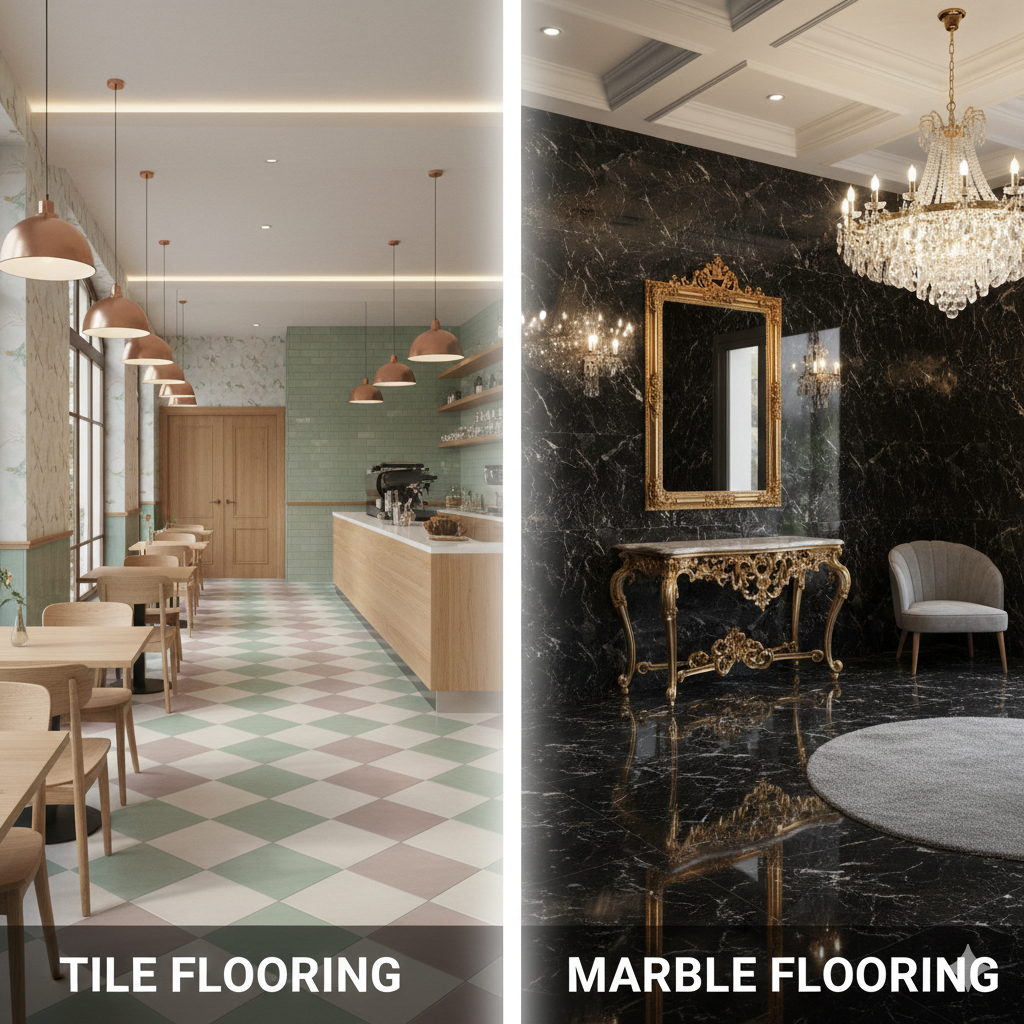
Marble and Tile Flooring

Appearance & Design Options

Marble: Natural Beauty with Limitations

Marble offers unique natural veining and a classic luxurious feel. However:

  • Every slab varies in color and pattern, making matching difficult
  • Limited color choices compared to tiles
  • Over time, polishing may fade the original shine

Tiles: Endless Design Freedom

Tiles offer unmatched design versatility:

  • Available in thousands of colors, patterns, and finishes
  • Marble-look tiles provide the same luxury appearance without natural flaws
  • Digital printing technology ensures uniform design across surfaces
  • Options include glossy, matt, satin, textured, and anti-skid finishes

Strength & Durability

Marble Durability

While marble is a hard natural stone, it is also:

  • Porous and prone to staining
  • Sensitive to acidic substances like lemon, vinegar, and cleaners
  • Can develop scratches and dull patches over time

Tile Durability

Modern tiles, especially vitrified and porcelain tiles, are engineered for strength:

  • Highly resistant to scratches, stains, and impact
  • Non-porous or low water absorption
  • Ideal for heavy traffic areas like living rooms, kitchens, and commercial spaces
  • Retain their finish for many years


Tile and Marble

Maintenance & Cleaning

Marble Maintenance Challenges

Marble requires high maintenance:

  • Needs regular polishing to maintain shine
  • Must be sealed frequently to prevent stains
  • Sensitive to spills, chemicals, and moisture
  • High risk of permanent marks if not cleaned immediately

Tile Maintenance Benefits

Tiles are extremely easy to maintain:

  • Simple cleaning with water and mild detergent
  • No need for polishing or sealing
  • Resistant to stains, moisture, and chemicals
  • Ideal for busy households and commercial spaces


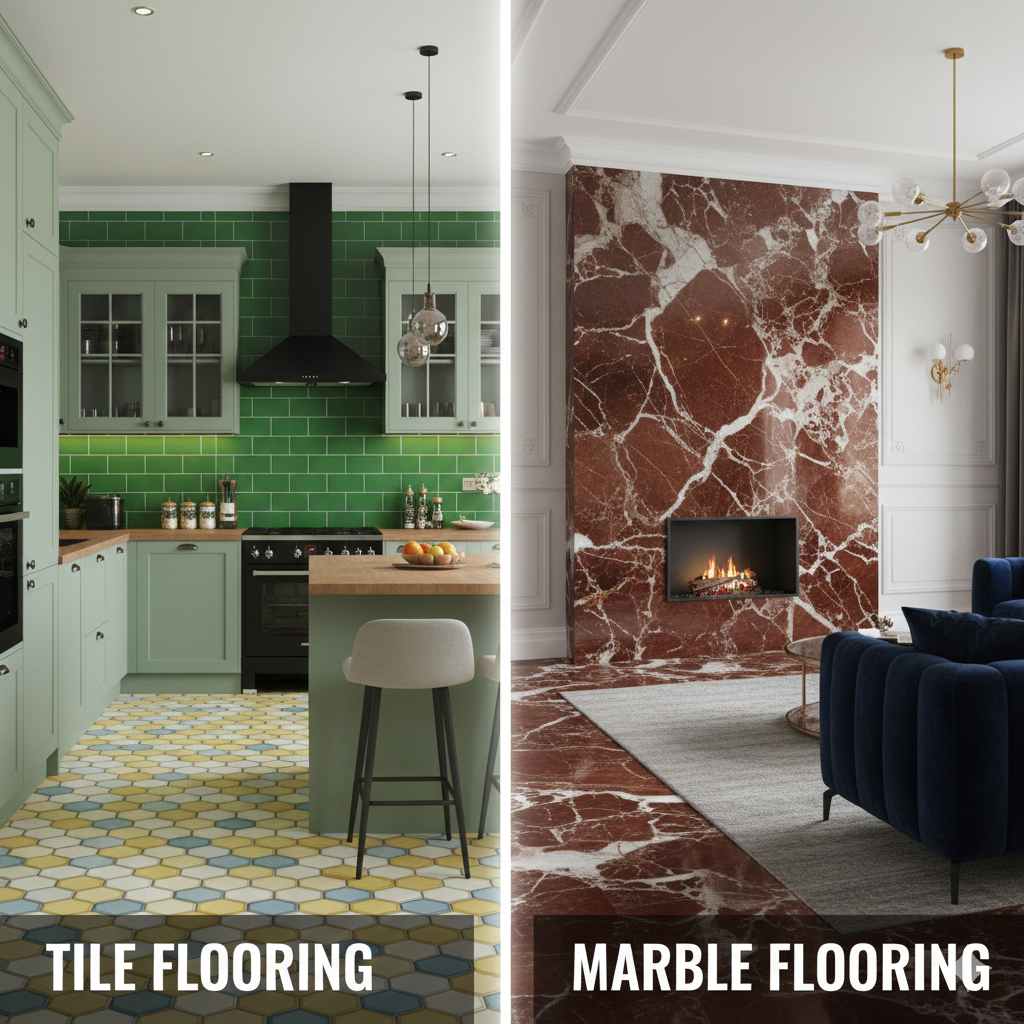
Marble and Tile

Water Resistance & Safety

Marble in Wet Areas

Marble absorbs water and becomes slippery when wet, making it:

  • Unsafe for bathrooms, balconies, and kitchens
  • Prone to water stains and discoloration
  • Vulnerable to fungal and algae growth in damp areas

Tiles in Wet Areas

Tiles are designed for moisture resistance:

  • Anti-skid tiles available for bathrooms and outdoor areas
  • Low water absorption prevents seepage and dampness
  • Hygienic and resistant to mold and bacteria

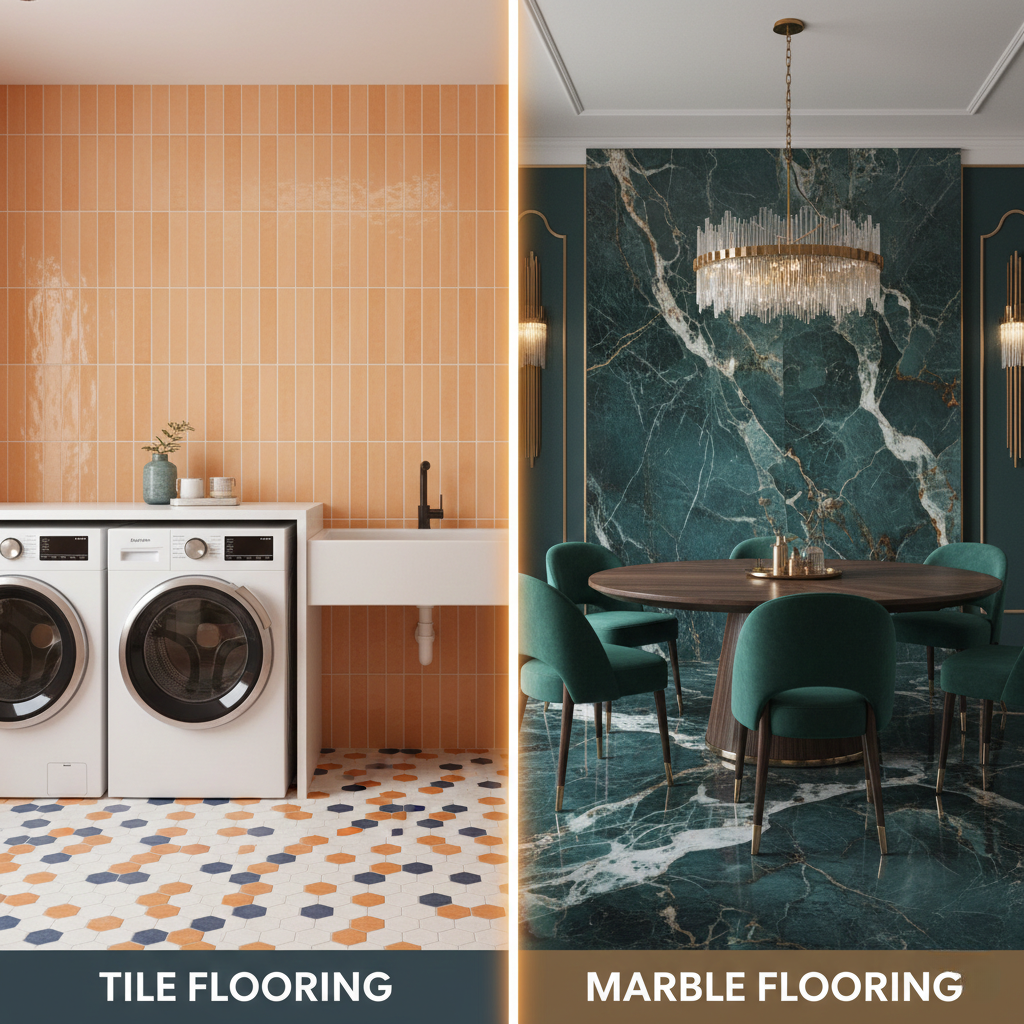
tile flooring and marble flooring

Cost & Budget Comparison

Marble Cost Factors

Marble is a premium natural material:

  • High material cost depending on quality and origin
  • Expensive transportation and installation
  • Regular polishing and sealing add long-term expenses

Tile Cost Advantages

Tiles offer excellent value for money:

  • Wide price range suitable for every budget
  • Lower installation cost
  • Minimal maintenance cost over time
  • Marble-look tiles provide luxury at a fraction of the price


Tile and Marble Flooring

Installation & Availability

Marble Installation

  • Requires skilled labor
  • Heavy slabs increase handling difficulty
  • Matching veins and shades is time-consuming
  • Limited availability for large projects

Tile Installation

  • Easy and faster installation
  • Uniform sizes and shades
  • Widely available in standard and large formats
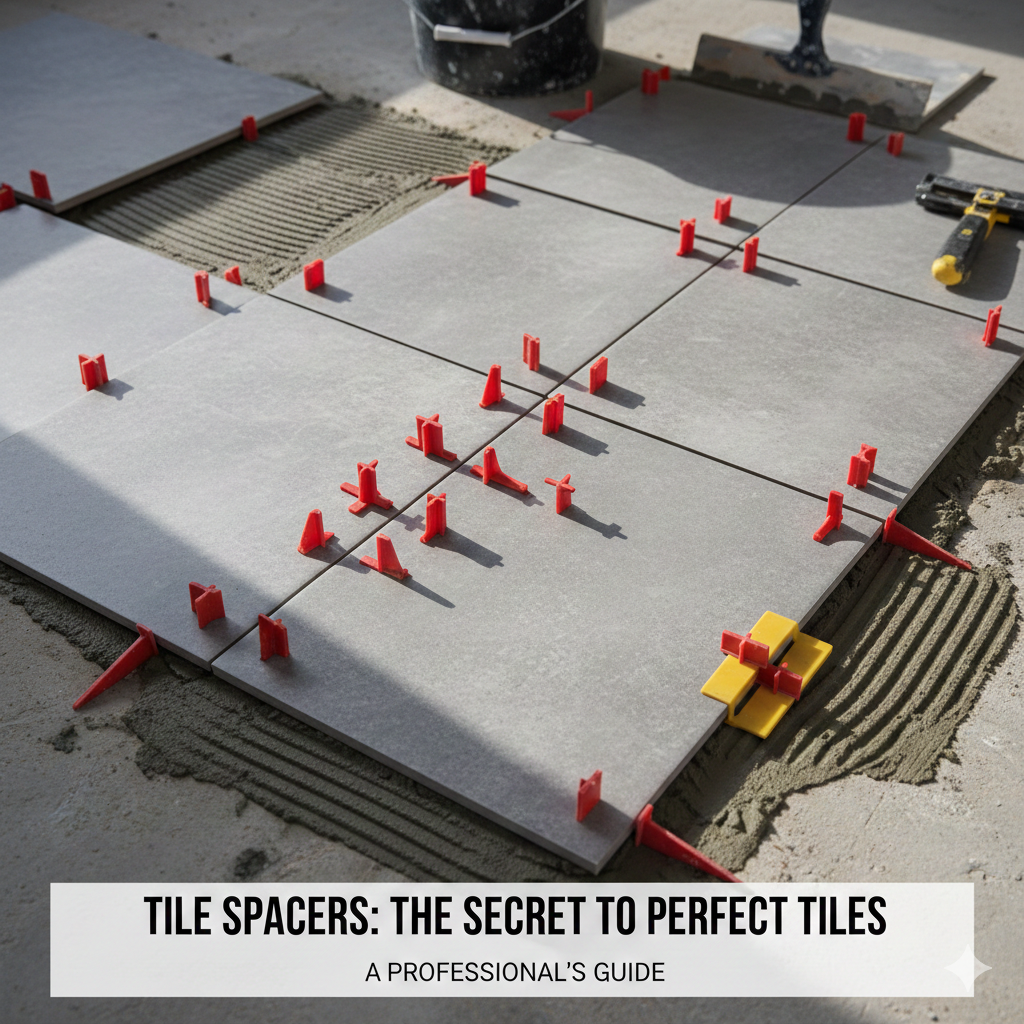
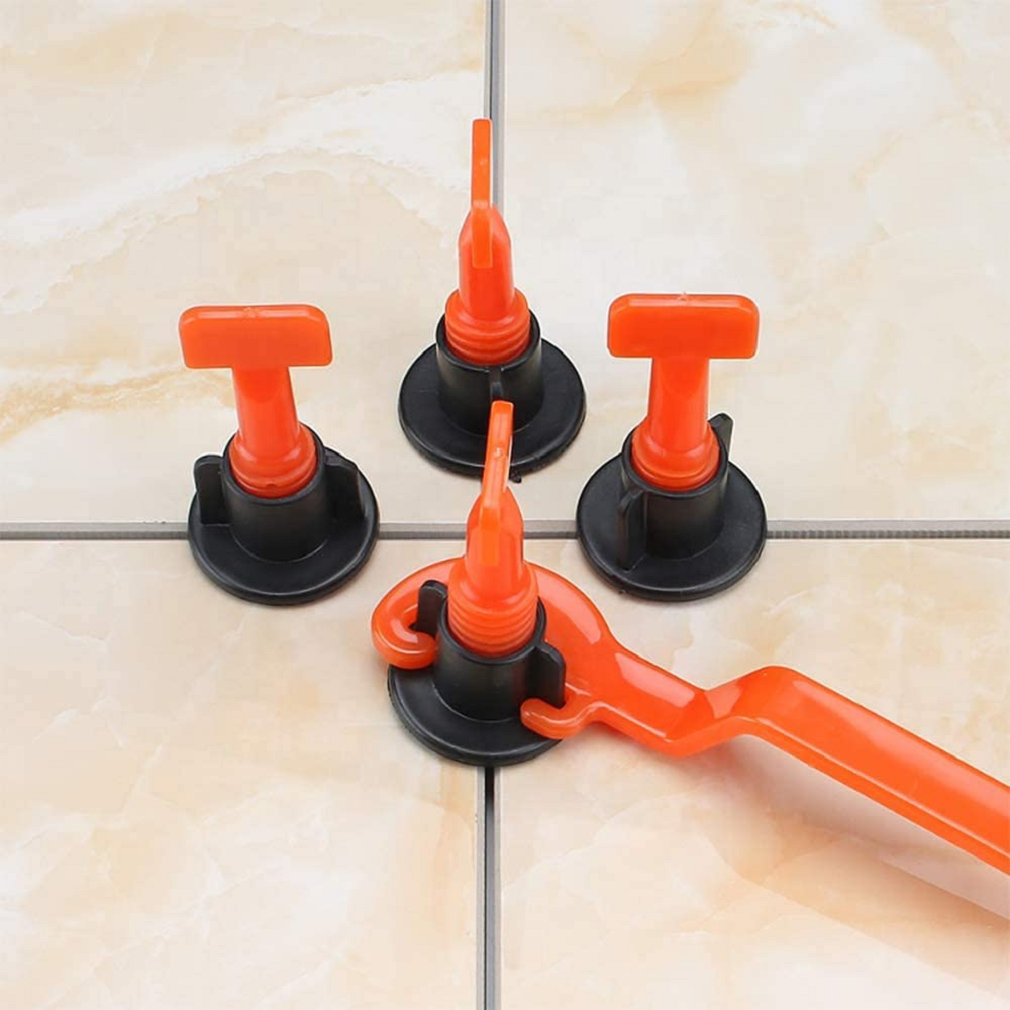
  • Compatible with modern leveling systems


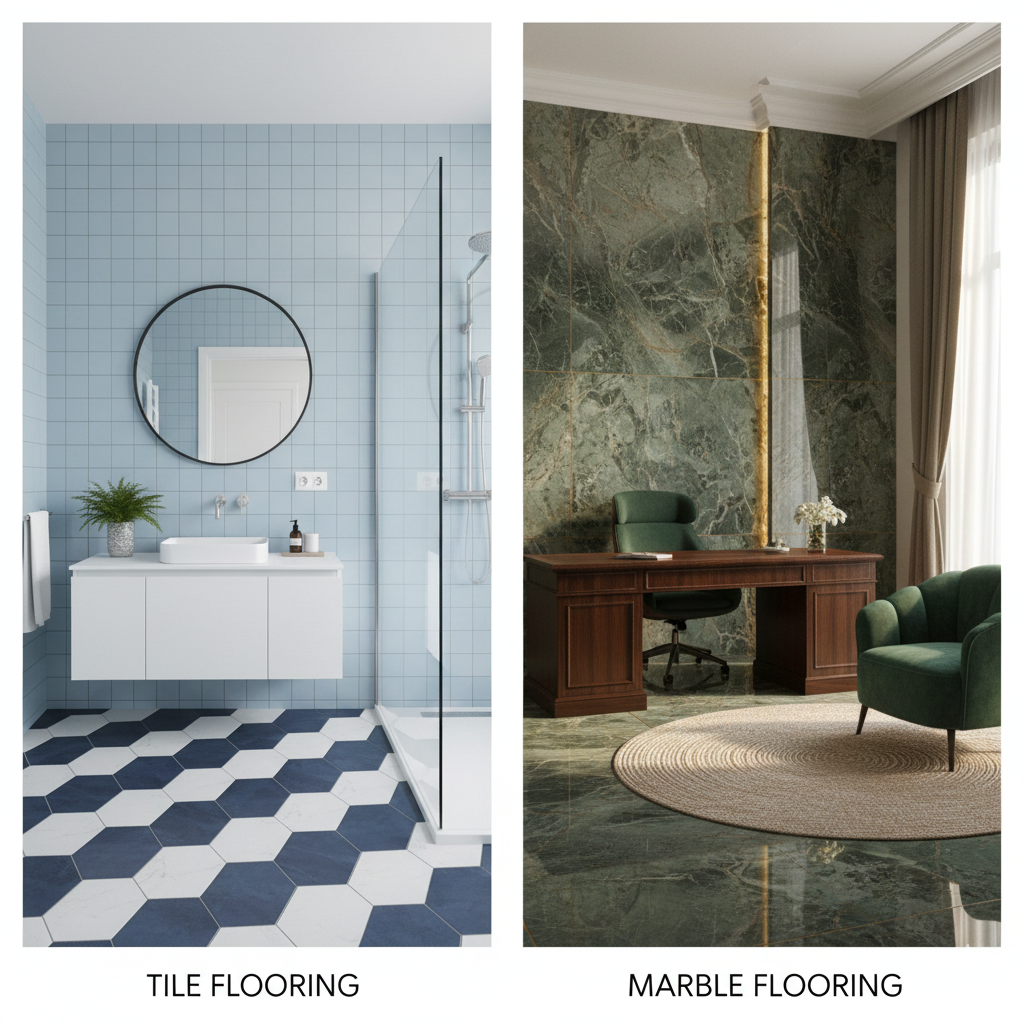
Tile and marble

Eco-Friendliness & Sustainability

Marble

  • Quarrying causes environmental damage
  • Limited natural resource
  • High carbon footprint during extraction and transportation

Tiles

  • Manufactured with controlled processes
  • Many tiles use recycled materials
  • Longer life cycle reduces replacement frequency

Comparison Table: Marble vs Tiles

FeatureMarbleTiles
Design VarietyLimited natural patternsWide range of designs & finishes
DurabilityModerate, prone to scratchesHighly durable & impact resistant
MaintenanceHigh (polishing, sealing)Very low maintenance
Water ResistancePoorExcellent
Slip ResistanceLowAnti-skid options available
CostExpensiveBudget-friendly options
InstallationComplexEasy & quick
Long-Term PerformanceNeeds frequent careRetains finish for years

Why Tiles Are the Better Choice for Modern Homes

Tiles combine beauty, performance, and practicality in a way marble cannot match:

  • Offer the luxury look of marble without its disadvantages
  • More durable and suitable for Indian climate conditions
  • Easy to clean and maintain for daily life
  • Perfect for all spaces – living room, bedroom, kitchen, bathroom, balcony, and outdoors
  • Available in large slabs, seamless finishes, and premium textures

With advancements in tile technology, today’s tiles can replicate natural marble, stone, wood, and concrete with superior strength and consistency.

Final Verdict: Marble or Tiles?

While marble has timeless elegance, it comes with high cost, heavy maintenance, and limited performance in modern living conditions.

Tiles clearly emerge as the superior choice for today’s homes – offering better durability, safety, affordability, design variety, and long-term value.

If you are looking for a flooring and wall solution that is stylish, strong, and hassle-free, tiles are undoubtedly the smarter investment for your home.

Why Choose ISHAN WORLD

When it comes to selecting the right tiles, sanitaryware, bathware, and bath fittings, ISHAN WORLD stands out as a trusted, all-in-one destination for quality, variety, and value. We offer a carefully curated selection of ceramic, porcelain, vitrified, double charge, and full body tiles—sourced from top manufacturing units using the latest technologies.

At ISHAN WORLD, we believe that every space deserves the perfect combination of design, durability, and price. Whether you’re building your dream home, renovating a bathroom, or designing a commercial project, our products match every taste and requirement. From elegant matt finishes to luxury sugar and carving tiles, we provide choices that are both aesthetic and functional.

Our expert guidance, transparent sourcing, and competitive pricing make tile selection easy and hassle-free. We don’t just sell tiles—we help you make informed decisions. Visit ISHAN WORLD today and experience the difference in quality, service, and style.

Join hands with one of India’s fastest-growing tile brands – Ishan World – and build a successful, hassle-free business with our FOFO model, PAS facility, expert support, and exclusive product range designed for modern India.

Connect with ISHAN WORLD to explore hallway tiles in many designs and styles, and create a welcoming and memorable hallway to make lasting impressions.

ISHAN WORLD – Build Beautiful. Live Better.

Contact Us : 7078270782

Visit Us : www.ishanworld.com

Write Us : info@ishanworld.com

Visit our social media handles

Instagram : Click here

Facebook : Click here

Whatsapp: Click here

Pinterest : Click here

Twitter : Click here

Youtube : Click here

Blogspot : Click here

Quora : Click here

Medium :Click here

LinkedIn : Click here

Divya Store : Click Here

Navya Store : Click Here

Express Store : Click Here For Sewla , Click Here For Firozabad
Frequently Asked Question

1. Is tile better than marble for home flooring?

Yes, tiles are generally a better choice for home flooring than marble. Tiles are more durable, stain-resistant, water-resistant, and require very little maintenance compared to marble. They also offer a wider range of designs and finishes, making them more practical and cost-effective for modern homes.


2. Can tiles give the same luxurious look as marble?

Absolutely. With advanced digital printing technology, marble-look tiles can perfectly replicate the natural veins, shades, and elegance of real marble. These tiles provide the same premium appearance while offering better strength, uniformity, and easier maintenance.


3. Which is easier to maintain – marble or tiles?

Tiles are much easier to maintain than marble. Marble needs regular polishing and sealing and is sensitive to stains and acids. Tiles, on the other hand, only require simple cleaning with water and mild detergent and maintain their finish for many years without special care.


4. Are tiles suitable for bathrooms and wet areas compared to marble?

Yes, tiles are far more suitable for bathrooms, kitchens, balconies, and other wet areas. Tiles have low water absorption and anti-skid options that make them safer and more hygienic. Marble absorbs water and becomes slippery, increasing the risk of stains and accidents.

5. Which option is more budget-friendly in the long run?

Tiles are more budget-friendly in the long run. Although marble may look premium initially, its high purchase cost, expensive installation, and regular maintenance make it costly over time. Tiles offer excellent durability, low maintenance, and affordable pricing, giving better long-term value.

Tile Spacer

What is the Need of Tile Spacer in Tile Installation?

By :Ishan World

Tile installation is not just about choosing stylish designs or premium materials; it also requires precision in alignment and spacing. One of the most overlooked yet essential tools in the tiling process is the tile spacer. These small, simple components play a significant role in achieving professional, clean, and durable tile finishes.

Whether you are a homeowner planning renovation, a contractor, or an interior designer, understanding the purpose and importance of tile spacers can greatly improve the quality of your tile work.

Tile Spacer

What is a Tile Spacer?

A tile spacer is a small, typically plastic, cross-shaped or T-shaped accessory used during tile installation to maintain uniform gaps (joints) between tiles. These gaps are later filled with grout, ensuring:

  • a balanced aesthetic look
  • structural stability
  • prevention of tile breakage due to stress

Tile spacers come in various sizes (1 mm to 10 mm or more) depending on:

  • type of tile
  • room type
  • design preference
  • grout thickness requirement

Why Tile Spacers Are Needed in Tile Installation

1. Ensures Uniform Grout Joints

Without spacers, tiles can shift during installation, leading to uneven joints. This results in:

  • crooked alignment
  • unprofessional finish
  • aesthetic imperfections

With spacers, grout joints remain consistent in width, enhancing visual appeal and symmetry.

2. Prevents Tile Cracking and Chipping

Tiles expand and contract due to:

  • temperature changes
  • building settlement
  • moisture absorption

Spacers leave adequate space for grout, which absorbs movement. Without spacing, tiles press against each other, causing:

  • edge chipping
  • cracks
  • popping out of tiles

3. Improves Water Drainage in Wet Areas

In bathrooms, balconies, and kitchens, tiles are frequently exposed to water. Proper spacing helps:

  • allow grout sealing
  • prevent seepage
  • improve drainage slope

Tightly installed tiles trap moisture, leading to:

  • dampness
  • fungal growth
  • tile debonding

4. Enhances Aesthetic Appearance

Straight lines and even spacing create a premium visual effect. Tile spacers help achieve:

  • symmetry in wall and floor tiles
  • perfect alignment in large slab tiles
  • visually pleasing patterns

Without spacers, patterns such as:

  • subway layout
  • herringbone
  • basketweave

lose uniformity, reducing design value.

5. Makes Tile Replacement Easier

If tiles get damaged in the future, the presence of grout joints created by spacers allows:

  • easy cutting
  • hassle-free removal
  • simple replacement

Without spacing, tightly packed tiles become difficult to remove without disturbing surrounding tiles.

Types of Tile Spacers

Tile spacers come in various shapes depending on layout style:

Type of Tile SpacerShapeBest ForApplication
Cross Spacers✚ crossStandard grid layoutsWall & floor tiles
T-SpacersT shapeEdge & corner tilingBorder tiles
Wedge SpacersWedgeSloping or irregular spacingUneven surfaces
Horseshoe SpacersU shapeLarge format tilesExtra stability
Leveling SpacerClip & wedgeHigh-precision levelingLarge slab tiles

Cross Spacer

Cross spacers are small plastic tools shaped like a “+” used during tile installation to maintain equal gaps between tiles. They help create a standard grid layout by keeping tiles perfectly aligned both horizontally and vertically. Suitable for wall and floor tiles, cross spacers ensure uniform joints, neat finishing, and professional-looking tile patterns.

T – Spacer

T-spacers are tile spacing tools shaped like the letter “T”, mainly used where one tile meets the side of another, such as at edges, corners, or staggered layouts. They help maintain consistent gaps and proper alignment in wall and floor tile installations, especially in brick or offset patterns, giving a clean and balanced finish.

Wedge Spacers

Wedge spacers are tapered, adjustable plastic spacers used in tile installation to fine-tune spacing and leveling between tiles. They are especially helpful for correcting minor height differences and maintaining uniform gaps in wall and floor tiling, particularly with large format tiles. Wedge spacers ensure straight lines, proper alignment, and a smooth, professional finish.

HorseShoe Spacers

Horseshoe spacers are U-shaped plastic spacers used to maintain precise spacing and leveling between tiles, especially at the bottom row, edges, and corners. They are ideal for wall and floor tile installations where height adjustment is needed, such as supporting heavy or large-format tiles. Horseshoe spacers provide strong support, consistent joints, and help achieve a straight, even tile layout.

Leveling Spacers

Leveling spacers are part of tile leveling systems used to eliminate lippage and keep adjacent tiles at the same height during installation. They fit between tiles and work with wedges or caps to apply uniform pressure, ensuring a flat, even surface. Suitable for wall and floor tiles, leveling spacers improve alignment, reduce installation errors, and give a smooth, professional finish—especially important for large-format tiles.

How to Choose the Right Size of Tile Spacer

The spacer size depends on:

  • tile material
  • tile size
  • aesthetic preference
  • room area

Recommended spacer sizes:

Tile TypeRecommended Spacer Size
Wall Tiles2–3 mm
Floor Tiles3–5 mm
Large Format Tiles/Slabs4–6 mm
Rustic/Stone Tiles6–10 mm
Outdoor Tiles5–10 mm

What Happens If You Don’t Use Tile Spacers?

Skipping tile spacers can cause long-term problems:

  • uneven gaps
  • misaligned tiles
  • weak structure
  • poor water resistance
  • cracks and debonding
  • unprofessional finish

Step-by-Step Use of Tile Spacers

  1. Apply tile adhesive or mortar
  2. Place tile on adhesive
  3. Insert tile spacers at edges or corners
  4. Fix adjoining tiles maintaining same gap
  5. Allow tiles to set
  6. Remove spacers after setting
  7. Apply grout in the joints

Advantages of Tile Spacers at a Glance

✔ Perfect alignment

✔ Uniform grout spacing

✔ Crack prevention

✔ Improved aesthetics

✔ Better durability

✔ Easy repair and replacement

Conclusion

Tile spacers may be small, but their impact on tile installation quality is massive. They ensure structural strength, visual harmony, and long-term durability. Whether it is a home, office, showroom, or outdoor space, using tile spacers is essential for professional, flawless tile installation.

If you are planning tiling work, never overlook tile spacers—they are the secret behind perfectly aligned, long-lasting tiles.

Why Choose ISHAN WORLD

When it comes to selecting the right tiles, sanitaryware, bathware, and bath fittings, ISHAN WORLD stands out as a trusted, all-in-one destination for quality, variety, and value. We offer a carefully curated selection of ceramic, porcelain, vitrified, double charge, and full body tiles—sourced from top manufacturing units using the latest technologies.

At ISHAN WORLD, we believe that every space deserves the perfect combination of design, durability, and price. Whether you’re building your dream home, renovating a bathroom, or designing a commercial project, our products match every taste and requirement. From elegant matt finishes to luxury sugar and carving tiles, we provide choices that are both aesthetic and functional.

Our expert guidance, transparent sourcing, and competitive pricing make tile selection easy and hassle-free. We don’t just sell tiles—we help you make informed decisions. Visit ISHAN WORLD today and experience the difference in quality, service, and style.

Join hands with one of India’s fastest-growing tile brands – Ishan World – and build a successful, hassle-free business with our FOFO model, PAS facility, expert support, and exclusive product range designed for modern India.

Connect with ISHAN WORLD to explore hallway tiles in many designs and styles, and create a welcoming and memorable hallway to make lasting impressions.

ISHAN WORLD – Build Beautiful. Live Better.

Contact Us : 7078270782

Visit Us : www.ishanworld.com

Write Us : info@ishanworld.com

Visit our social media handles

Instagram : Click here

Facebook : Click here

Whatsapp: Click here

Pinterest : Click here

Twitter : Click here

Youtube : Click here

Blogspot : Click here

Quora : Click here

Medium :Click here

LinkedIn : Click here

Divya Store : Click Here

Navya Store : Click Here

Express Store : Click Here For Sewla , Click Here For Firozabad
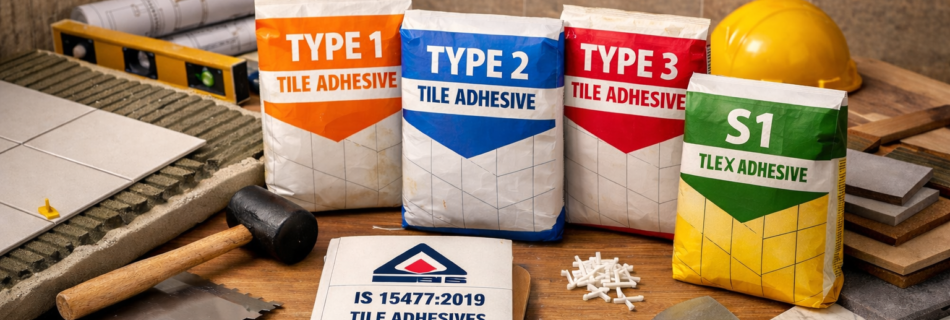
Frequently Asked Question
1. Are tile spacers really necessary for tile installation?

Yes, tile spacers are essential for achieving uniform grout joints, proper alignment, and long-lasting tile installation. Without spacers, tiles may shift, leading to uneven gaps, poor aesthetics, and higher chances of cracking or debonding over time.


2. What size tile spacer should I use for my project?

The spacer size depends on the type and size of tiles and the area being tiled. Generally, 2–3 mm spacers are used for wall tiles, 3–5 mm for floor tiles, and 4–6 mm or more for large-format or outdoor tiles. Always follow manufacturer recommendations for best results.


3. Can tile spacers be reused after installation?

Yes, many tile spacers made from durable plastic can be reused if they are removed carefully before grouting and are not damaged. However, leveling system clips are usually single-use, while wedges and caps can often be reused.


4. When should tile spacers be removed?

Tile spacers should be removed once the tile adhesive has set but before grouting begins. This ensures clean, open joints for grout application and prevents spacers from getting permanently stuck between tiles.


5. What is the difference between normal spacers and leveling spacers?

Normal spacers maintain uniform gaps between tiles, while leveling spacers (leveling systems) also control height differences between adjacent tiles. Leveling spacers prevent lippage and are especially important for large-format and slab tiles where perfect flatness is critical.