Ceramic vs Vitrified vs Porcelain Tiles: Key Differences
Choosing the right tile is one of the most critical decisions when building or renovating a home. Ceramic, vitrified, and porcelain tiles are the three most common options on the market, yet they differ significantly in raw material composition, water absorption, breaking strength, and installation requirements.
In this guide, Ishan World breaks down how these three tile categories compare and where each finish performs best in your home.
What Are Ceramic Tiles?
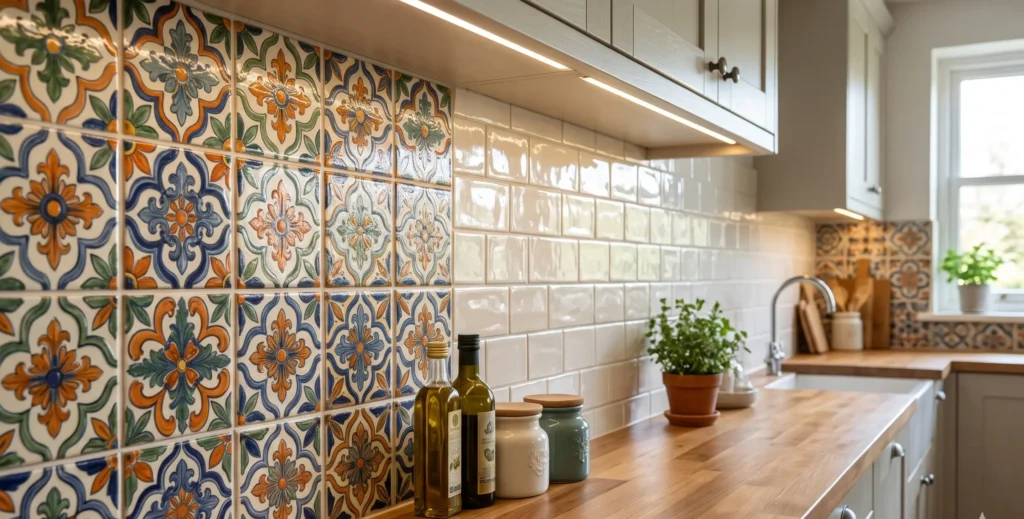
Ceramic tiles are crafted from a blend of natural red or white clay, sand, and minerals, pressed into shape and kiln-fired at moderate temperatures. They are finished with a durable decorative glaze that provides an extensive array of colors, patterns, and surface sheens.
Key Benefits
- Cost-Effective: Economical option for covering expansive wall areas.
- Rich Aesthetic Variety: Available in countless decorative motifs, handcrafted looks, and vibrant glazed hues.
- Easy Wall Maintenance: Glazed surfaces resist splashes and wipe clean with mild household cleaners.
- Effortless Cutting: Softer density allows for straightforward cuts around electrical outlets, pipes, and corners.
Best Suited For: Kitchen backsplashes, bathroom accent walls, powder rooms, and low-traffic interior walls.
Keep in Mind: Standard ceramic tiles have a higher water absorption rate (typically >3% to 10%) and lower structural density than vitrified or porcelain tiles, making them generally unsuitable for heavy-load floors or outdoor patios.
What Are Vitrified Tiles?
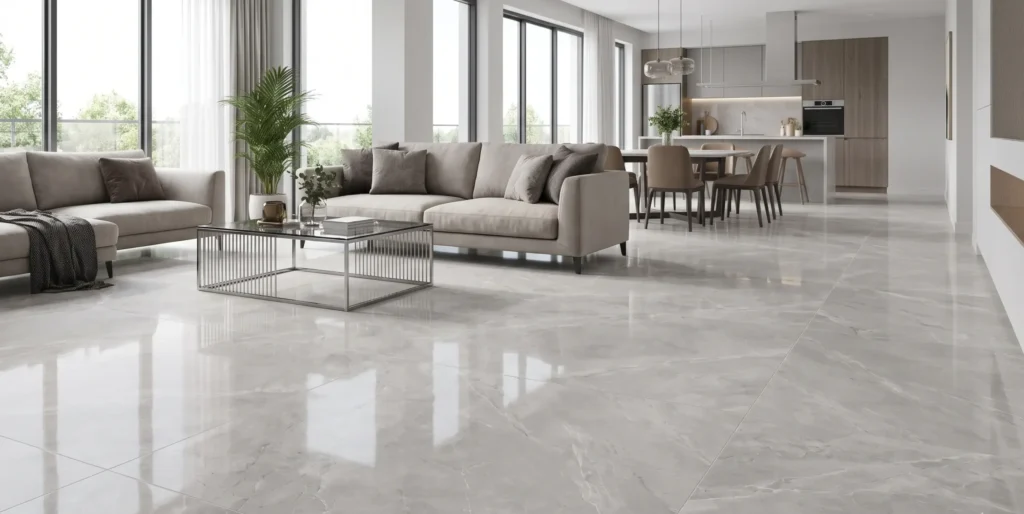
Vitrified tiles are manufactured through a process called vitrification, where a refined mixture of clay, silica, quartz, and feldspar is fused together under extreme pressure and high firing temperatures. This creates a single, glass-like body with minimal porosity.
Key Benefits
- Low Water Absorption: Highly resistant to moisture, humidity, and water ingress (typically <0.5%).
- High Breaking Strength: Dense body withstands continuous daily foot traffic and heavy home furniture.
- Versatile Finishes: Available in double charge, full body, glazed vitrified (GVT), and polished vitrified (PVT) surfaces.
- Stain & Scratch Resistance: Dense construction prevents spills and dirt from penetrating deep into the tile body.
Best Suited For: Living rooms, dining halls, bedroom floors, hallways, and commercial showrooms.
Keep in Mind: Vitrified tiles require specialized polymer-modified tile adhesives rather than traditional sand-cement mortar for a secure bond.
What Are Porcelain Tiles?
Porcelain tiles are essentially a specialized, ultra-dense branch of ceramic/vitrified manufacturing. They are produced using finely ground white kaolin clay and feldspar, pressed under hydraulic tonnage and fired at temperatures reaching up to 1200°C–1400°C.
Key Benefits
- Near-Zero Porosity: Certified porcelain must exhibit a water absorption rate of 0.5% or lower, offering exceptional moisture resistance.
- All-Weather Resilience: Withstands direct sunlight, freeze-thaw cycles, and heavy moisture without cracking.
- Through-Body Options: Many porcelain tiles carry color and mineral patterns completely through the tile thickness, disguising edge chips.
- Heavy-Duty Wear: High abrasion resistance suitable for residential and demanding commercial environments.
Best Suited For: Bathroom floors, shower stalls, kitchen floors, balconies, terraces, and covered outdoor entryways.
Keep in Mind: Because porcelain is extremely dense and hard, it requires diamond-tipped cutting blades and experienced installers.
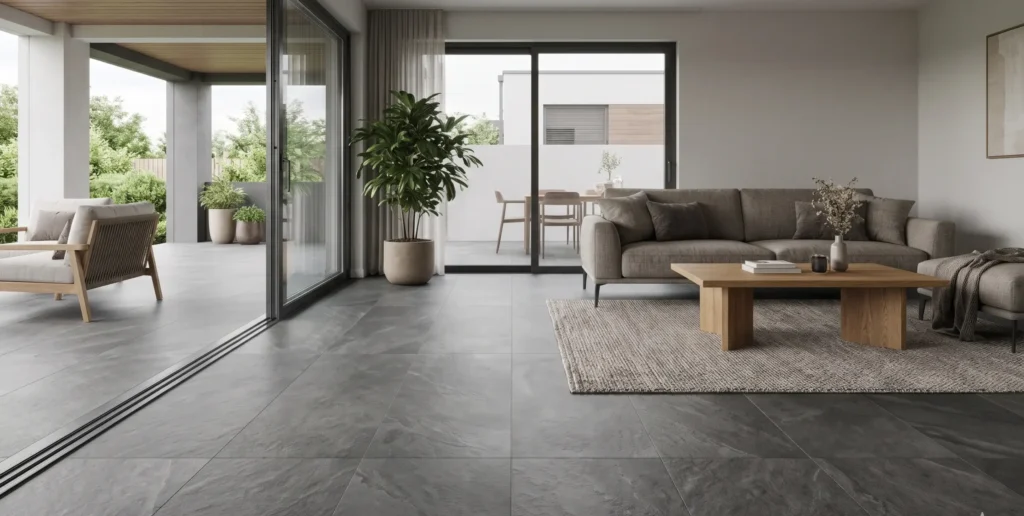
Ceramic vs Vitrified vs Porcelain Tiles: Direct Comparison
| Feature | Ceramic Tiles | Vitrified Tiles | Porcelain Tiles |
| Raw Composition | Natural clay, sand, and minerals | Clay, quartz, silica, and feldspar | Refined kaolin clay, quartz, and feldspar |
| Firing Intensity | Moderate temperatures | High temperatures (vitrified) | Extreme temperatures (1200°C+) |
| Water Absorption | Moderate to high (3% to 10%+) | Very low (generally <0.5%) | Extremely low (certified ≤0.5%) |
| Structural Density | Light to medium | Very dense and rigid | Ultra-dense and heavy |
| Slip & Stain Resistance | Good glaze stain resistance; varies on slip | High stain resistance; finish-dependent | Superior stain and frost resistance |
| Primary Placement | Walls, backsplashes, light accent areas | Interior floors, living rooms, corridors | Wet floors, high-traffic zones, outdoor spaces |
| Installation Tooling | Standard manual tile cutters | Heavy-duty tile cutters and polymer adhesive | Wet diamond saw blades and specialized adhesive |
| Price Range | Budget-friendly | Mid-range to premium | Premium |
Room-by-Room Guide: Which Tile Goes Where?
1. Living Room & Dining Area
- Best Choice: Vitrified Tiles (GVT / Double Charge)
- Vitrified tiles offer an expansive, seamless appearance with rectified edges, resisting foot traffic and moving furniture while staying easy to sweep and mop.
2. Kitchen
- Flooring: Vitrified or Porcelain Tiles. Resistant to dropped pots, cooking oil spills, and heavy foot traffic.
- Backsplashes: Ceramic Tiles. Ideal for adding creative color, subway tile layouts, or mosaic accents that wipe clean of cooking oil instantly.
3. Bathroom
- Walls: Glazed Ceramic or Glazed Vitrified Tiles. Protects drywall from steam and moisture while providing a clean, bright finish.
- Floors: Matte Porcelain or Anti-Skid Vitrified Tiles. The non-porous structure prevents sub-floor moisture buildup, while textured matte finishes provide secure wet traction.
4. Bedroom
- Best Choice: Ceramic or Glazed Vitrified Tiles. Because bedrooms experience light foot traffic, glazed ceramic or vitrified tiles in wood-plank or warm stone finishes work well within any budget.
5. Balcony & Outdoor Spaces
- Best Choice: Exterior-Grade Porcelain Tiles. Must be certified frost-resistant, UV-stable, and slip-resistant (R10 rating or higher) to withstand rain and direct sunlight without warping or fading.
Frequently Asked Questions
1. Which is better: ceramic or vitrified tiles?
Neither is universally better—they serve different purposes. Ceramic tiles are an economical and decorative choice for walls and backsplashes, while vitrified tiles are much stronger, less porous, and engineered specifically for floor applications.
2. Are porcelain tiles the same as vitrified tiles?
Porcelain is a specific category of vitrified tile meeting strict international standards for low water absorption (0.5% or less). While all porcelain tiles are vitrified, not all vitrified tiles meet the strict standards required for porcelain certification.
3. Which tiles are best for bathroom floors?
Matte porcelain or anti-skid vitrified tiles are best. Their minimal water absorption keeps moisture from penetrating beneath the tile, and the matte texture provides reliable grip when wet.
4. Can ceramic tiles be installed on living room floors?
Only ceramic tiles specifically designated as floor-grade (with an adequate PEI abrasion rating) should be used. However, vitrified tiles remain the industry benchmark for living rooms due to superior longevity and impact resistance.
5. How do I test tile quality before purchasing?
Examine water absorption, check diagonal squareness and edge straightness across multiple sample tiles, verify uniform glaze thickness, and confirm the manufacturer’s technical specifications.
Why Choose ISHAN WORLD
When it comes to selecting the right tiles, sanitaryware, bathware, and bath fittings, ISHAN WORLD stands out as a trusted, all-in-one destination for quality, variety, and value. We offer a carefully curated selection of ceramic, porcelain, vitrified, double charge, and full body tiles—sourced from top manufacturing units using the latest technologies.
At ISHAN WORLD, we believe that every space deserves the perfect combination of design, durability, and price. Whether you’re building your dream home, renovating a bathroom, or designing a commercial project, our products match every taste and requirement. From elegant matt finishes to luxury sugar and carving tiles, we provide choices that are both aesthetic and functional.
Our expert guidance, transparent sourcing, and competitive pricing make tile selection easy and hassle-free. We don’t just sell tiles—we help you make informed decisions. Visit ISHAN WORLD today and experience the difference in quality, service, and style.
Join hands with one of India’s fastest-growing tile brands –Ishan World– and build a successful, hassle-free business with our FOFO model, PAS facility, expert support, and exclusive product range designed for modern India.
Connect with ISHAN WORLD to explore hallway tiles in many designs and styles, and create a welcoming and memorable hallway to make lasting impressions.
ISHAN WORLD – Build Beautiful. Live Better.
Contact Us : 7078270782
Visit Us : www.ishanworld.com
Write Us:info@ishanworld.com
Visit our social media handles
Instagram : Click here
Facebook : Click here
Whatsapp: Click here
Pinterest : Click here
Twitter : Click here
Youtube : Click here
Blogspot : Click here
Quora :Click here
Medium :Click here
LinkedIn :Click here
Divya Store : Click Here
Navya Store : Click Here
Express Store : Click Here For Sewla , Click Here For Firozabad